Week 27:non-skid paint

This was the week for installing the rest of the deck hardware and getting ready to paint the non-skid.  Long days at the beginning of the week and shorter towards the end.

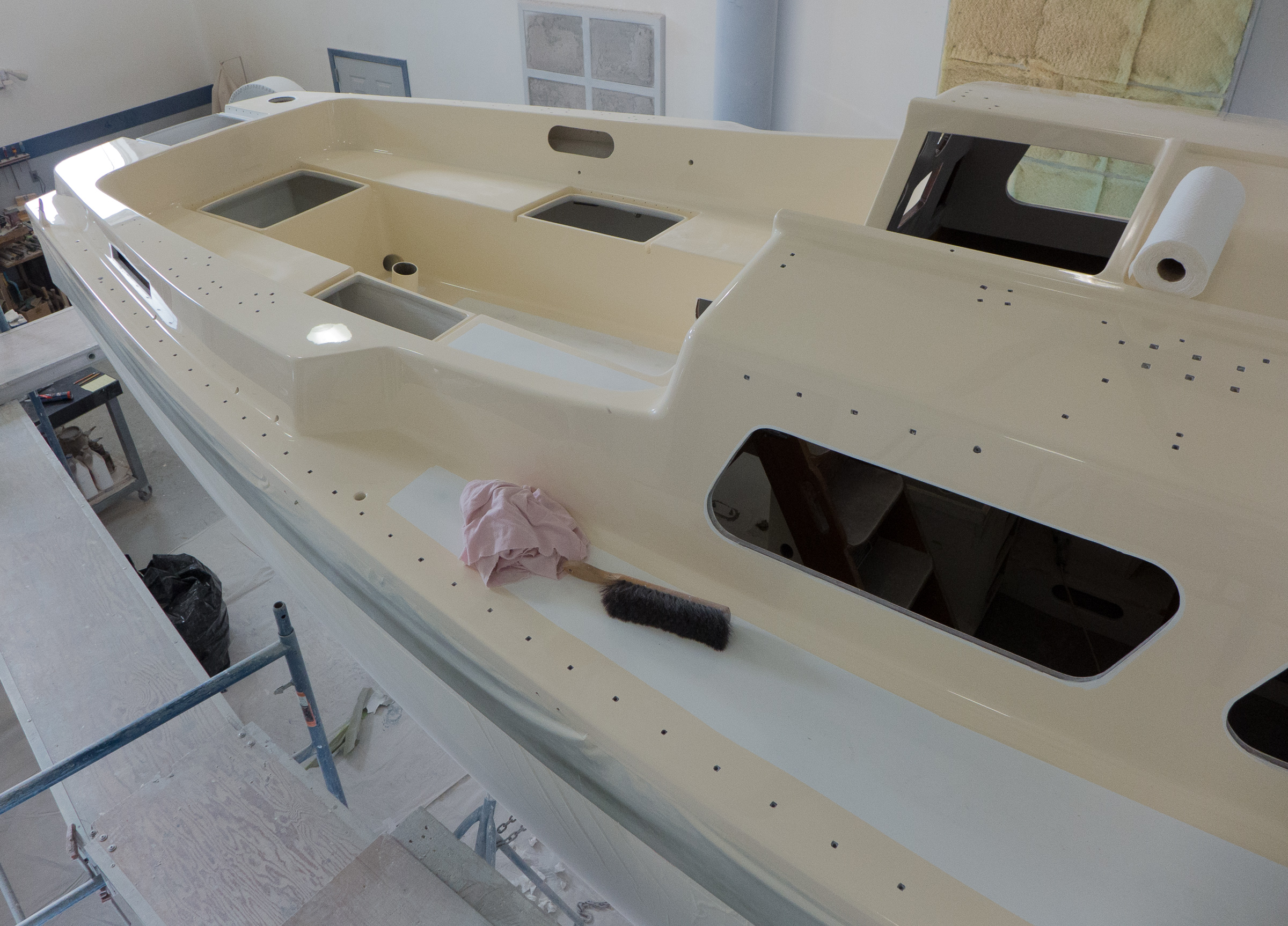
Here's what the autopilot shelf looks like with a coat of paint on it.  Looking at the picture we realized that we'll have to take the front piece off to bolt the hydraulic arm in place.  This will have to get done before the fuel tank goes back in and blocks access to the front piece.
Here’s what the autopilot shelf looks like with a coat of paint on it. Looking at the picture we realized that we’ll have to take the front piece off to bolt the hydraulic arm in place. This will have to get done before the fuel tank goes back in and blocks access to the front piece.

Also below are the hundreds of bolts that were used to install hardware.  Bill went through with a die grinder and got them shortened so there are no gotchas when you reach in lockers.

Inside the starboard locker.  Just a few bolts.
Inside the starboard locker. Just a few bolts.
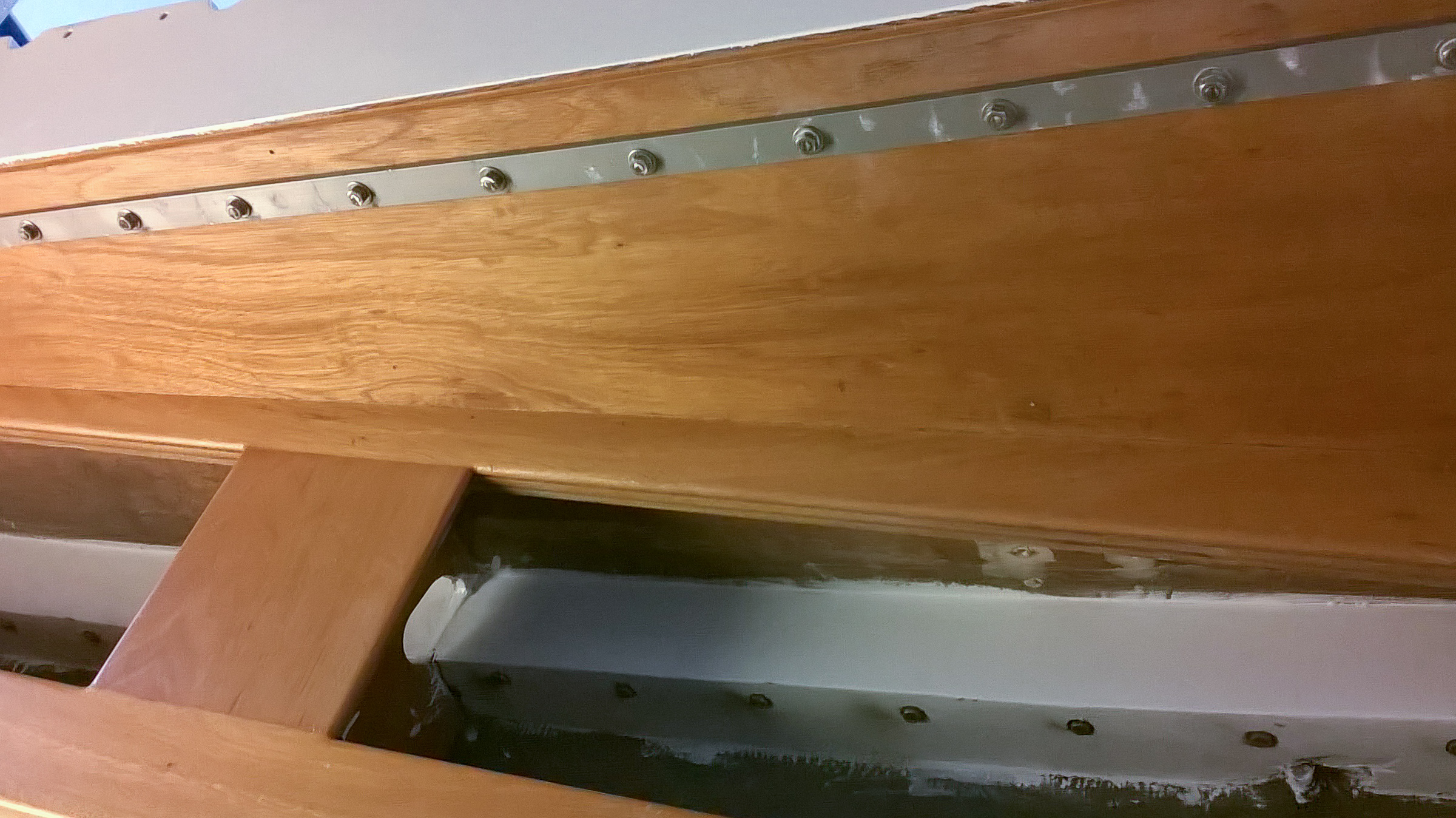
More bolts, this time inside the cabin.  The bar across the top is the staysail rail, with the toe rail bolts showing in the cubby underneath.
More bolts, this time inside the cabin. The bar across the top is the staysail rail, with the toe rail bolts showing in the cubby underneath.

Putting on hardware is pretty straightforward. Once it’s all in place, you can then figure out where the non-skid will go.  We thought we’d done a decent job taping off, but Chris straightened us out (literally) the next day.  You want nice round corners with consistent radii, minimal fiddly looking areas, and you want really straight lines so that the eyes beholding the job don’t have weird visual moments.  Achieving consistency when you have to consider three dimensions, not just two, is an exercise in practice and patience.  Wide tape helps, too.

papered__2
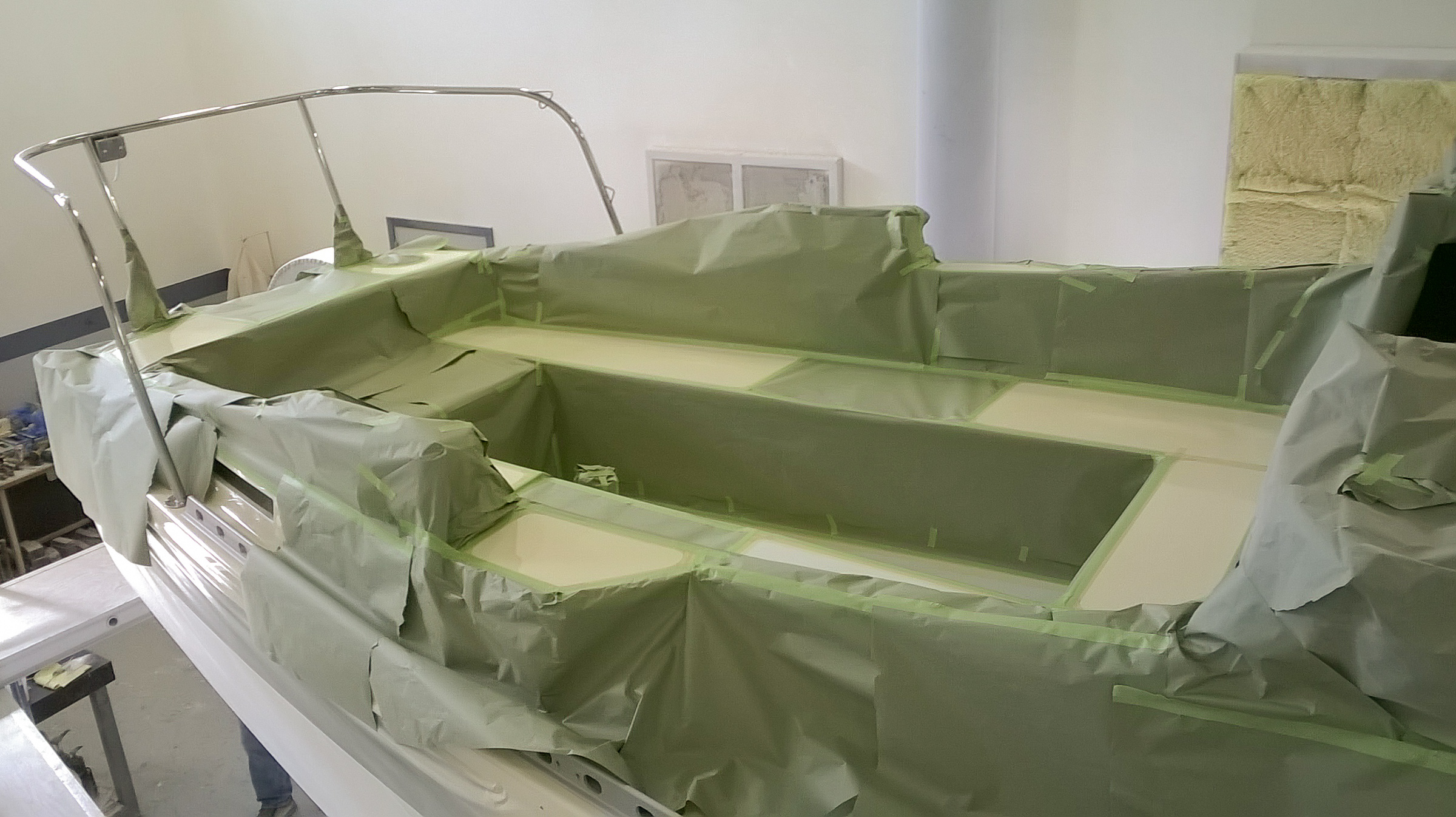
Foredeck masked off.
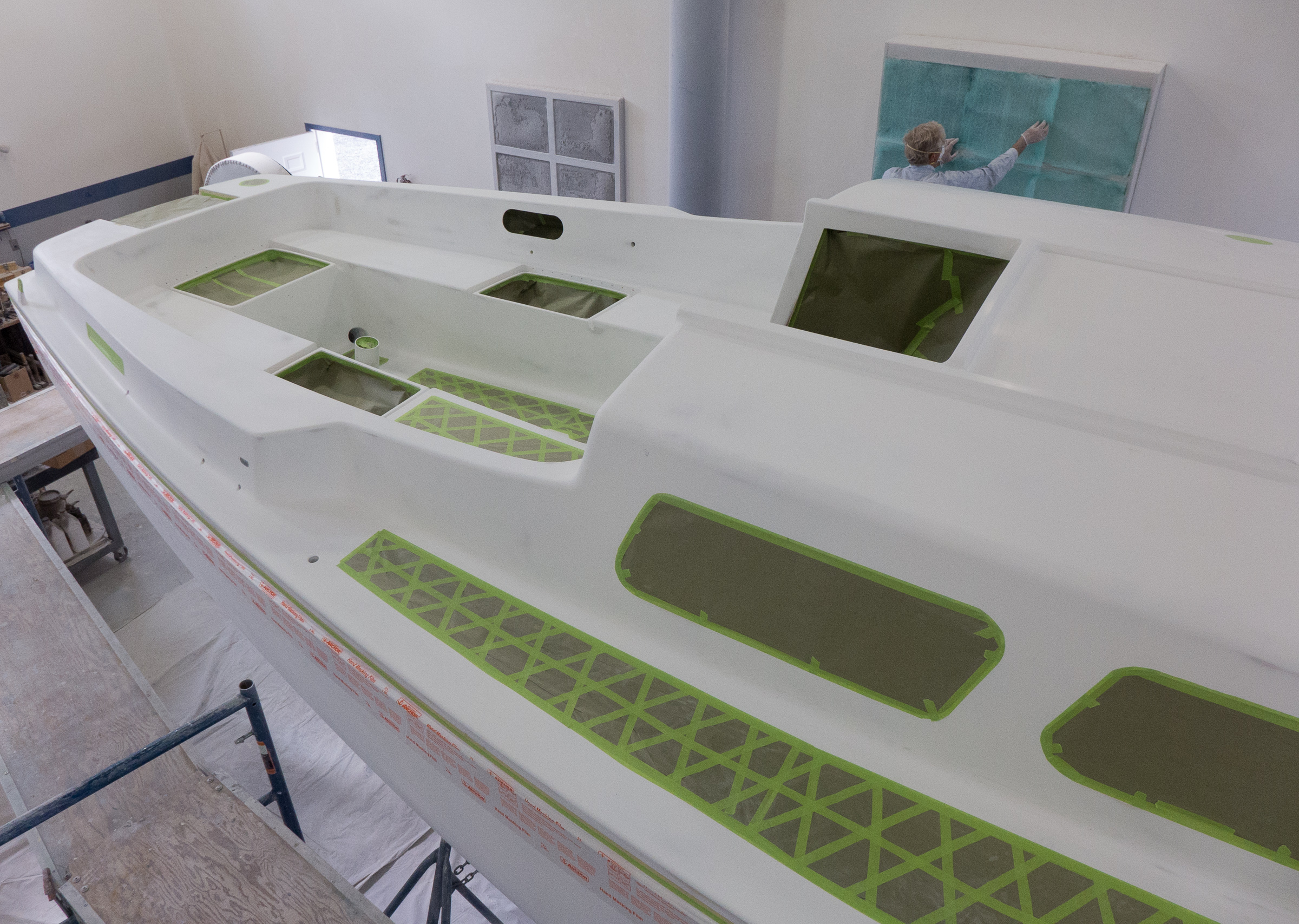
Taped for nonskid and ready to paint.
Taped for non-skid and ready to paint.
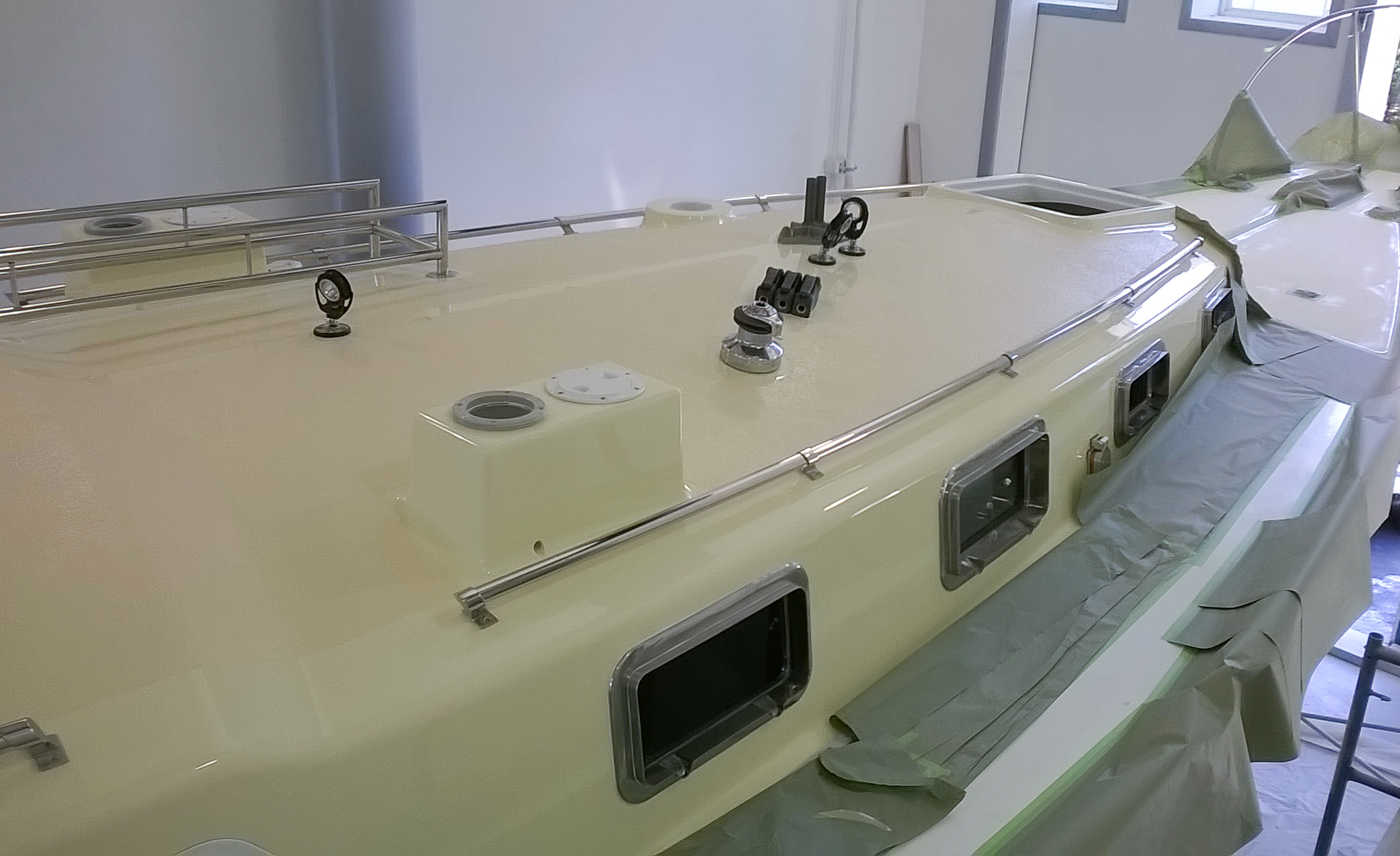
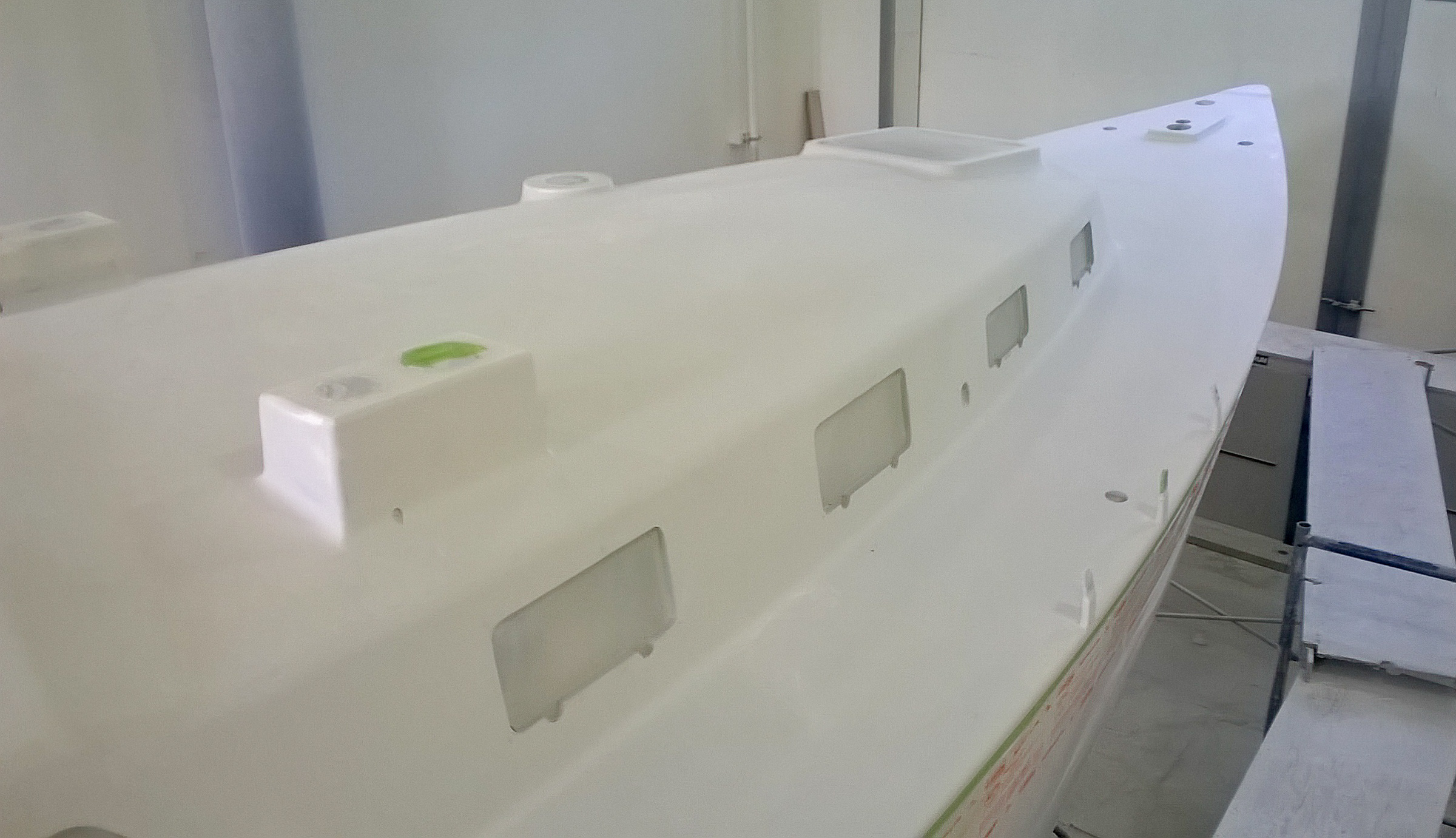
Cabin top with hardware installed.
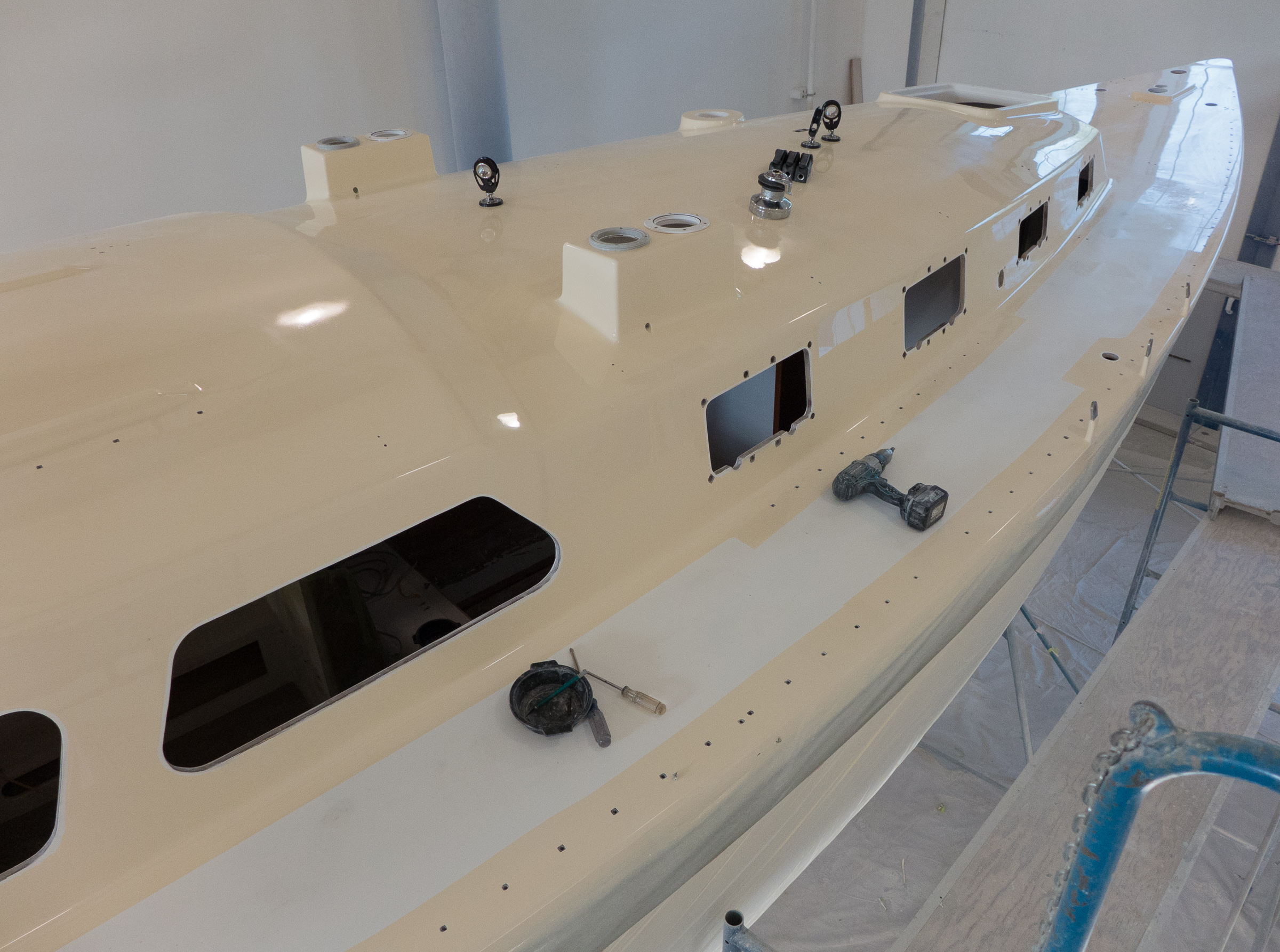
Cabin top after the non-skid was painted on.  The slightly pinker parts are where the non-skid is.  The luggage rack looking thing on the left is the oar rack for the dinghy.

So, you get all the hardware on, tape off where you want the non-skid to go, and then you put masking paper over everything that is remotely adjacent to where you will be painting.  And then, you get to take 80-grit sandpaper to the areas that you will be applying non-skid paint.  There goes parts of the expensive paint job.  It feels like two steps forward, and one step back, but it must be done.

Wednesday, our friend Randy came to help us with the Durabak, the paint we’re using for our non-skid.  Durabak is a paint full of rubber bits and it has great traction.  All the dust was removed and the surface wiped down with Xylene.  Bill rollered the non-skid on, Randy was the spotter and paint mentor, and Nina got to mix and keep the roller tray agitated and full of paint.  Lay down a first coat. Wait an hour and roller on another coat.  Peel off all the tape and masking for the area painted.  Three hours or so later, the cabin top and the cockpit sole were finished.  On Thursday, Bill and Nina painted the foredeck and the cockpit seats and coming.
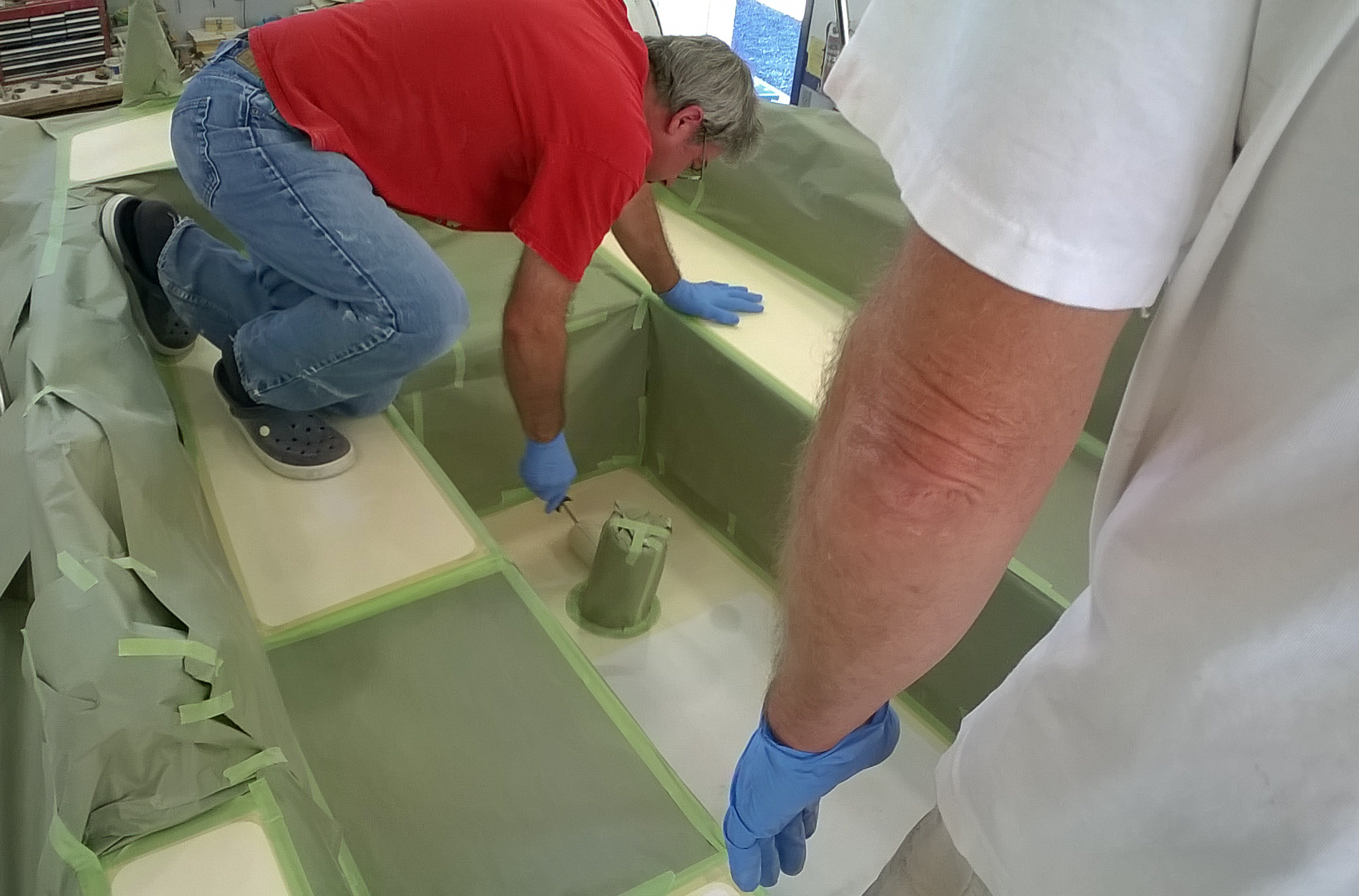
Bill rolling on the Durabak on the cockpit sole with Randy giving guidance and quality control.
Bill rolling on the Durabak on the cockpit sole with Randy giving guidance and quality control. 


Week 26: Zoom – Bolt on

The deck paint is dry and we have been busy. There is lots of gear to put back on Gypsy. We’re taking a break from the day jobs to bolt on hardware.  First task:  find the bolt holes. Every hole had been covered with a little square of tape and then it got painted over. The holes should show up as bumps in the paint. Some just blended in. It takes a good memory or being able to find the holes from below.  A good kabab skewer poked up from below, and out they pop.  They then need to be cleaned up with an x-acto knife.  There were hundreds of them.  Each day, we’ve managed to find more.  Four days in, we think we got most of them, although there are at least four of them we haven’t found yet, mainly because they are cast in and we can’t poke them out from below.

deck_holes
You can see some of the holes have been found.

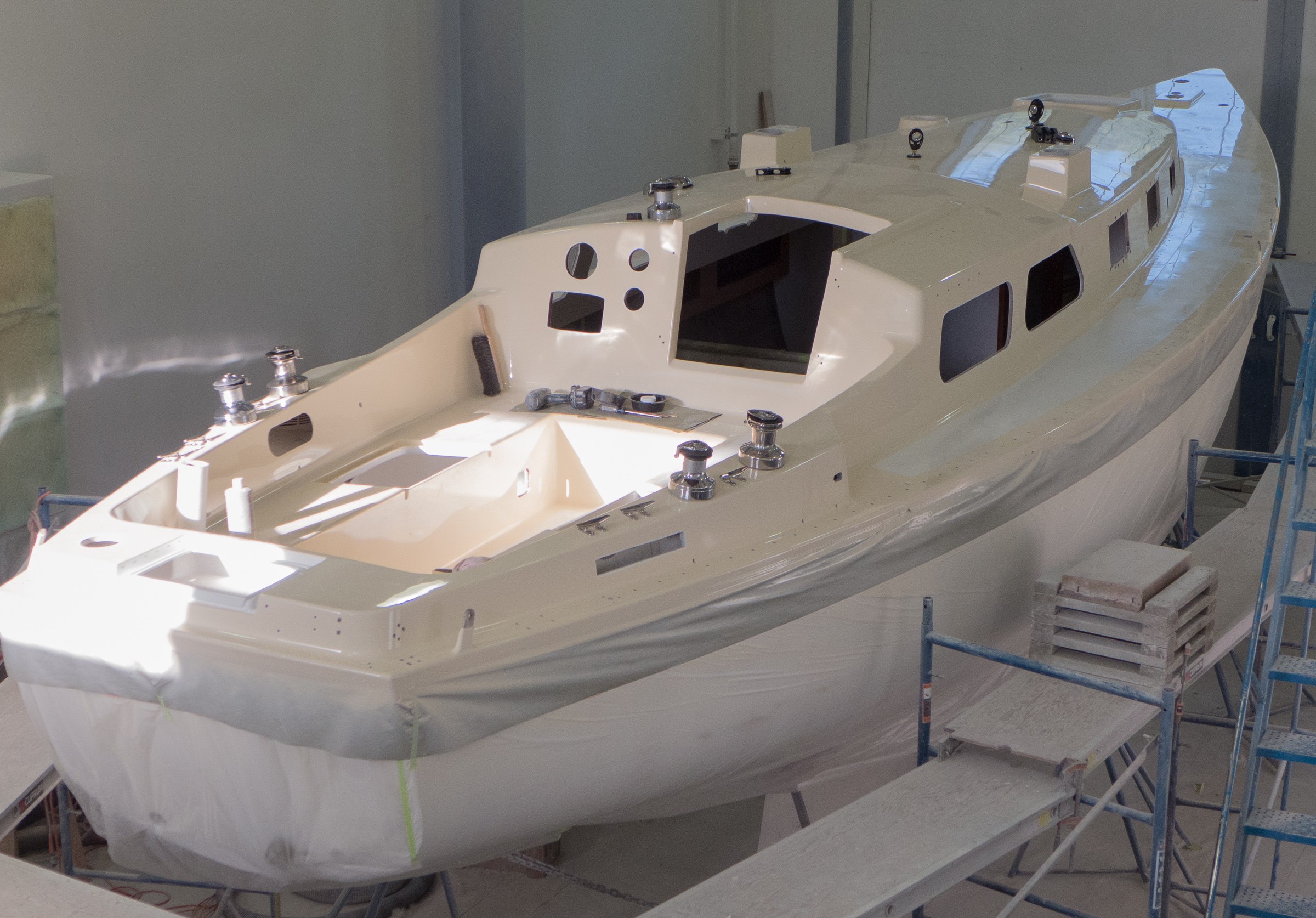
We are very happy with the deck color. It looks like beige, but we prefer to think of it as a rich cream.  We did not want to end up with a white boat.  The non-skid paint we will apply is a bit lighter in a similar color. The non skid will end up covering about half of the deck and where the white parts are still showing.

Sunday we put on the Main sail reefing winch,  turning blocks and line clutches.  We also put the deck plates on the dorade vents and a block for the main sheet.
Sunday we put on the mainsail reefing winch, turning blocks and line clutches. We also put the deck plates on the dorade vents and a block for the main sheet.
Monday we put on the headsail winches and the main sheet winch. We also installed the vang cleat, a Nicro solar vent above the galley and a line organizer for the mainsheet and vang line.
Monday we put on the headsail winches and the mainsheet winch. We also installed the vang cleat, a Nicro solar vent above the galley and a line organizer for the mainsheet and vang line.

Tuesday we tackled hand rails. We had to cut new pipe for the long rails on the cabin top. The threaded backing plates worked very well for the handrails.

New hand rails.
New hand rails.

We also installed the staysail track, shorepower AC inlet, staysail chainplate, anchor line cleat, anchor chain stopper and the anchor locker vent deck plate.

Fore deck.
Foredeck with (L to R) vent ring, anchor cleat, anchor chain snubber, staysail chainplate and staysail tack attachment fitting.

Wednesday we put the starboard toerail on. This required lots of caulk, 80-plus long machine screws and a lot of bolt tightening in awkward places.  We also got the stern dinghy cleats and the upper brackets for the Monitor wind vane installed.

Today we put the port toerail on. 82 more bolts. It took just as long as the starboard rail.

Both rails are on.
Both rails are on.

How did we do all of this?

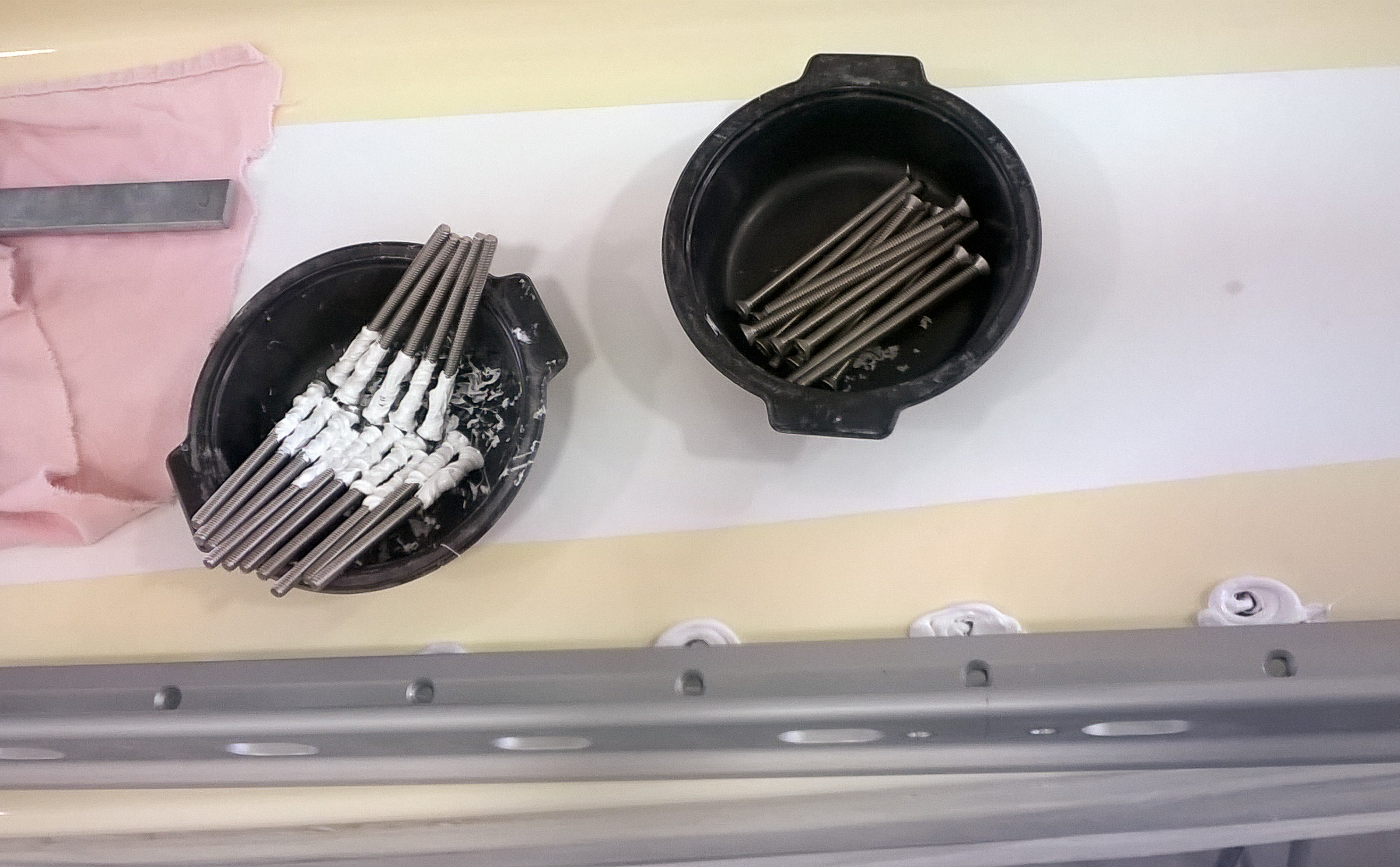
Bolt table, all of the bolts are grouped.
Bolt table, all of the bolts are organized by size.


Toe rail with caulk rings under around the bolt holes. The bolts are caulked too.
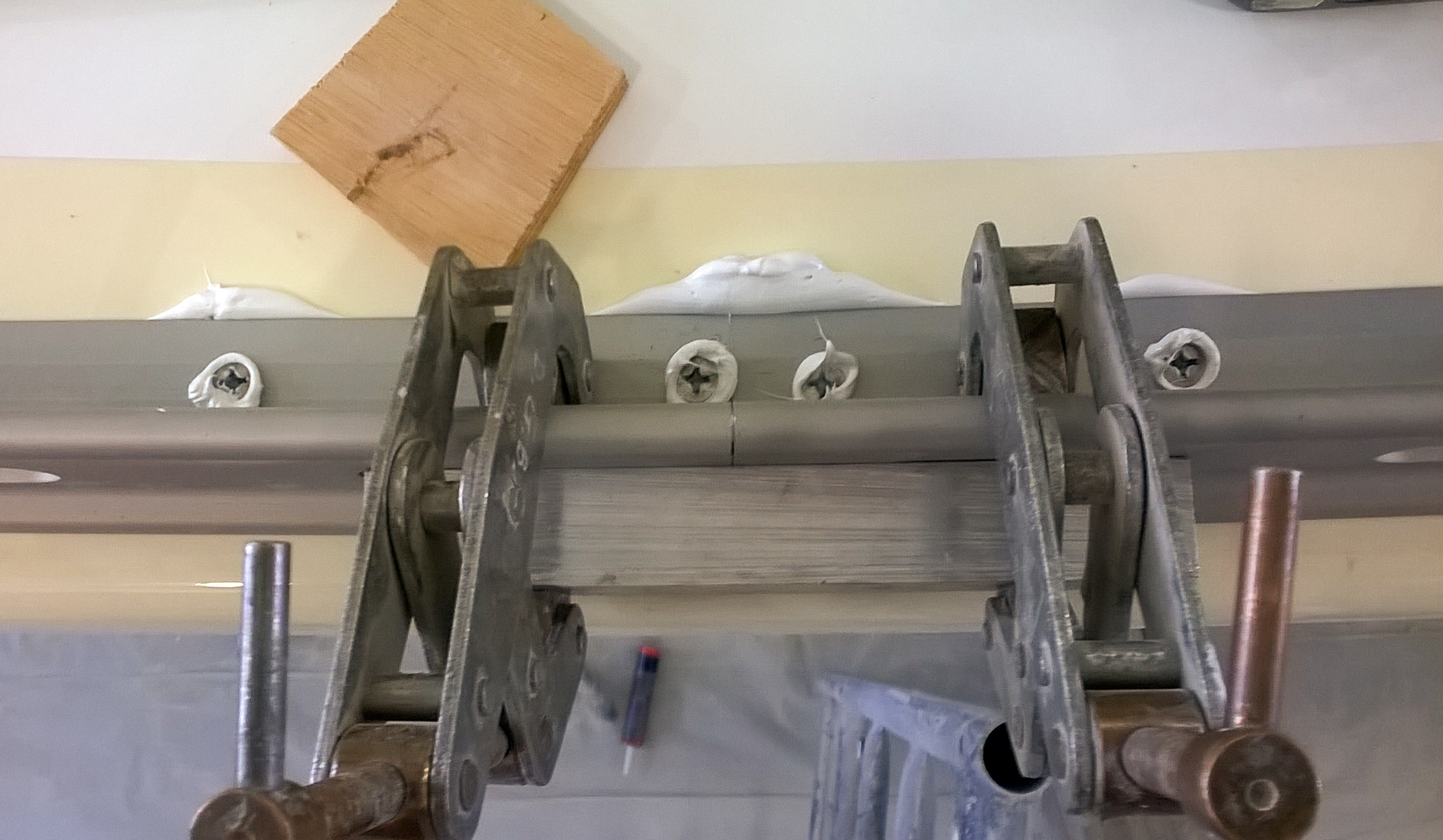
After the bolts are tightened the extra caulk squishes out. The clamps are holding the forward and aft sections of the toe rail together.
After the bolts are tightened the extra caulk squishes out.
The clamps are holding the forward and aft sections of the toe rail together.

The pictures show the basic steps except for bolt tightening and cleanup.  All the gushed out caulk gets cleaned up.  Everything that gets screwed into the boat gets lots of caulk and cleanup.

Week 25: Waiting for the paint to dry

It is painting time.  We checked out all of our colors, we opened the cans and looked, inside and out, and the colors still work. This is good news since I am not sure if you can send back paint if you don’t like it. The deck has been now been painted and it looks good.

The over spray makes the paper very sticky. The tape lets Tom walk on the paper without tearing it.
The over spray makes the paper very sticky. The tape reinforcement lets Tom walk on the paper without tearing it.

We spent Sunday re-taping off the deck. There was enough over spray and dust on the old paper that we needed to cover it up or replace it. On Monday Tom and Chris painted the deck with the color and then with clear coat. This took them all day. Since they did not want us under foot and the paint fumes are toxic we spent the day out side working on the mast and in the basement sorting parts for reassembly.

When we go back on Sunday the deck will be done and we will start to put the hardware back on Gypsy.  But first, remember all those small pieces of tape we put over all the holes we cast?  We have to find them and carefully poke out the tape. Then we can put on hardware.


Week 24: A Bright and Sunny Weekend

We had a couple of parameters we had to work around this weekend.  The boat is all sealed off due to painting.  Tom got the final coat of sealer on the hull and has been busy sanding all the remaining imperfections before applying the paint primer.  Meanwhile, we were pretty much banished from the boat.  This wouldn’t have been so bad except that sanding a hull means tons of dust and the temperatures have been in the upper 90s.  So outside or into the basement we went.

Bill’s project: the mast.  It was outside but we did manage to move it into a shadier spot closer to the shop than it had been in.  Bill worked on several projects on the mast: installing the new spinnaker track and grinding a pair of “ears” off  up by the spreaders.

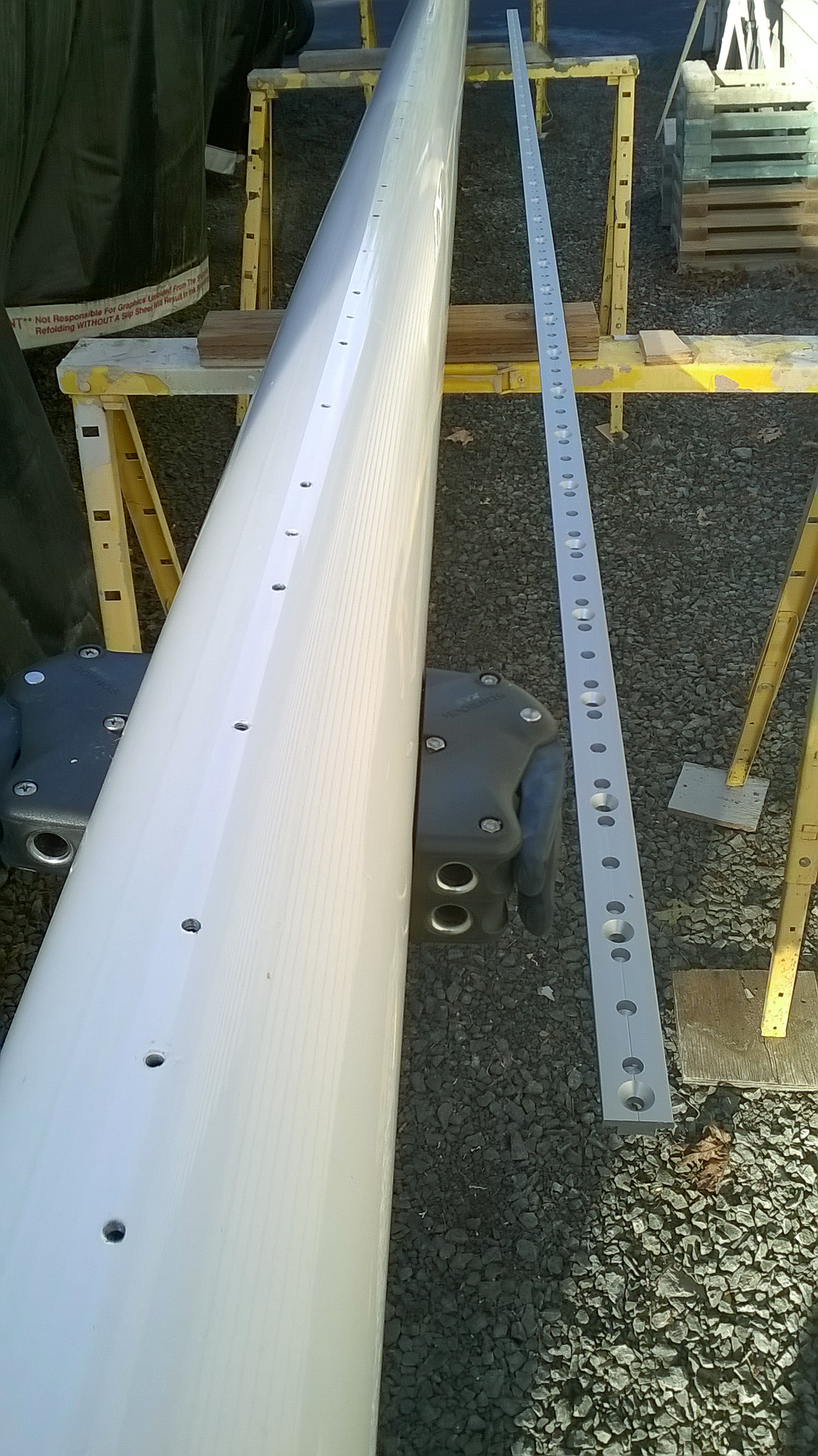
mast and track for the spinnaker pole.
The mast and the new track for the spinnaker pole.  Very few of the old holes lined up, so more holes were drilled.

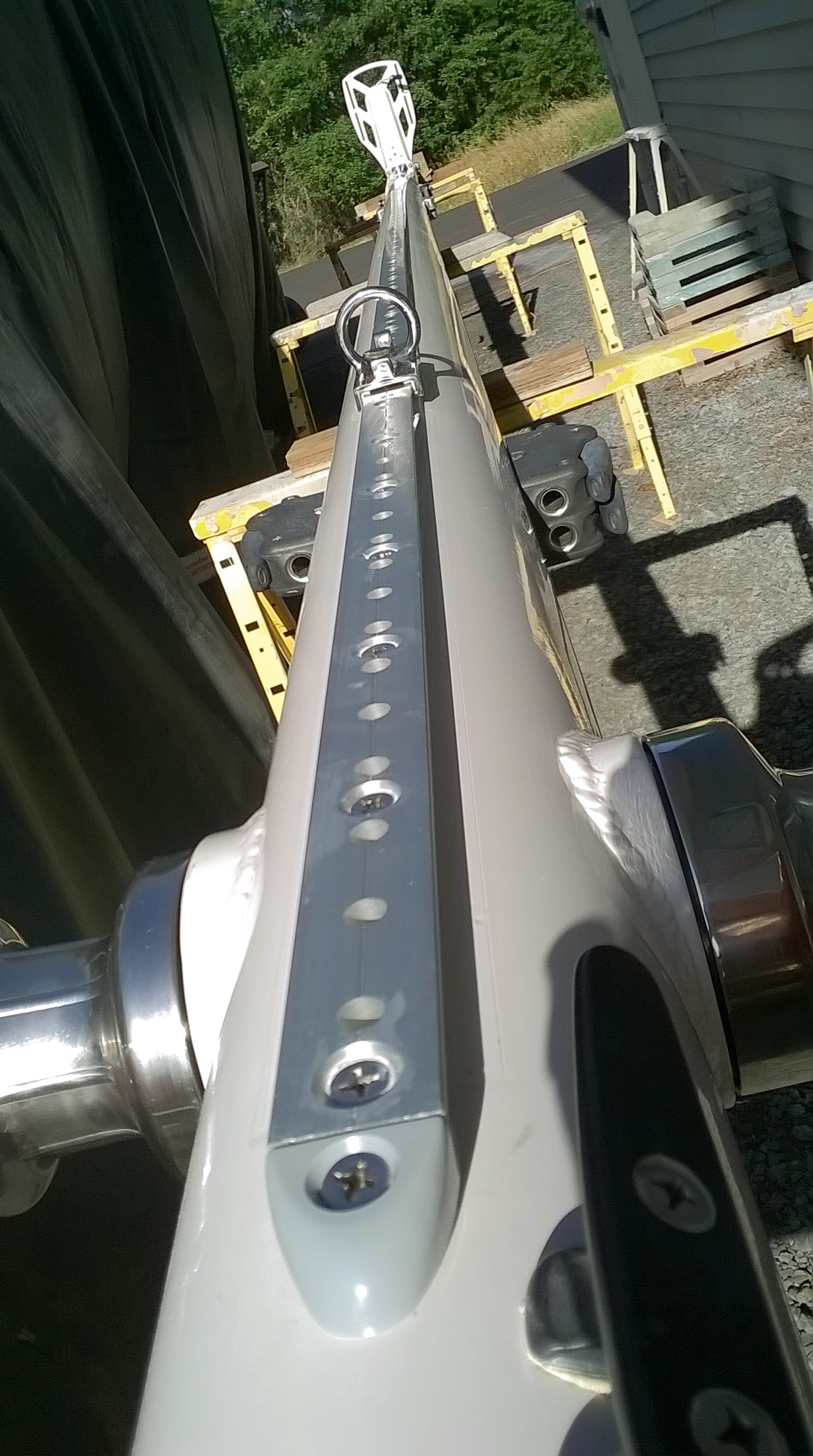
Here’s what it looks like installed.

New track on the mast.
New track on the mast with new ends.  The lacrosse shaped thing towards the end is the radar mount.

The radar mount platform was installed. The idea was to install the radar to the platform and then take them off the mast as a unit for transport.  The only snag was that the cable that goes to the radar could not be unhooked while the radar was bolted on.  Easily fixed, but it will mean one more thing that will have to be put together in the yard when the boat is ready to float again.

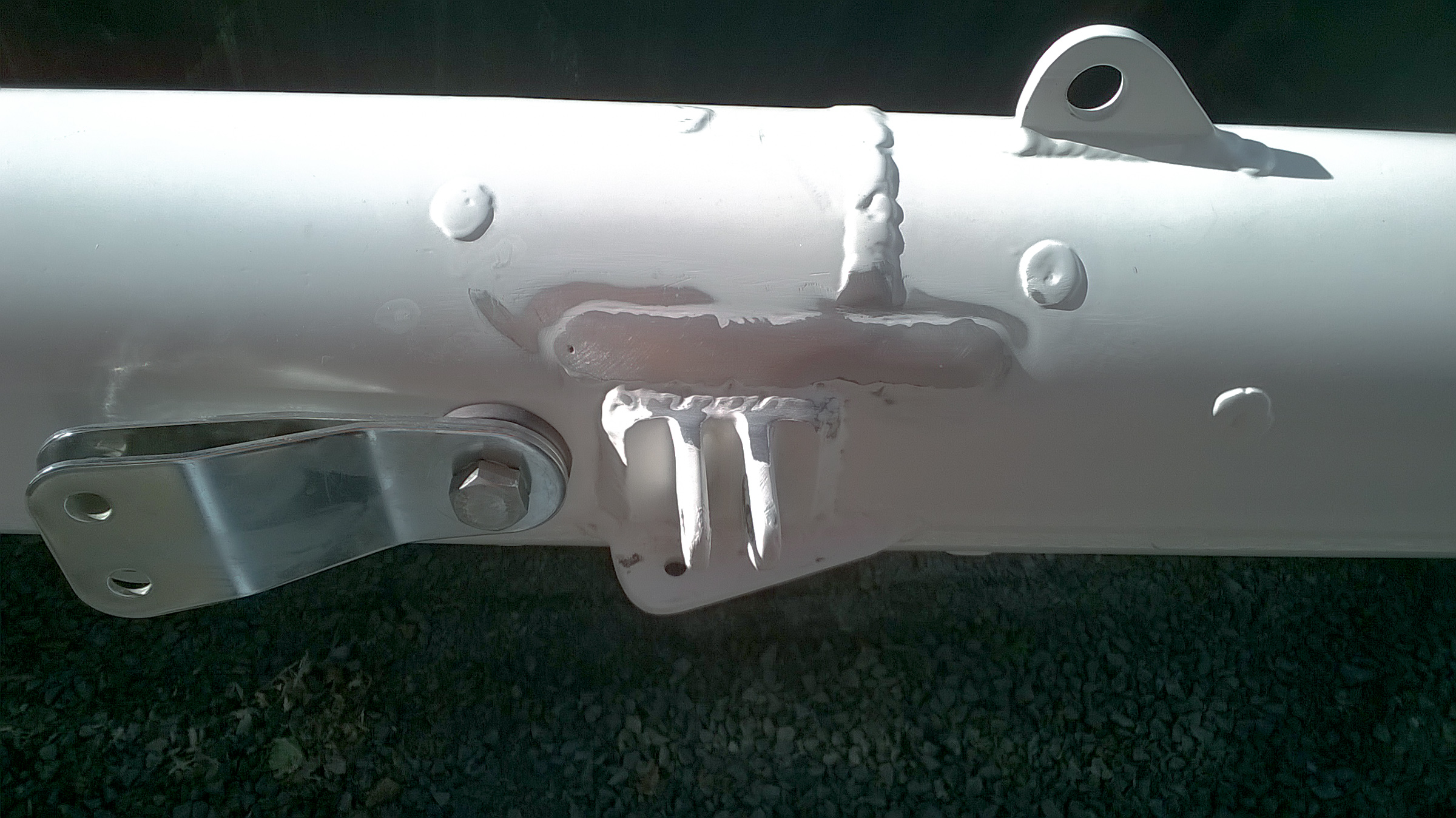
The “ears” on the mast were major line snaggers, so Bill got rid of the ones on the front of the mast.  We’re keeping the aft set for when we add lazy jacks (lines that will catch the sails when they are dropped).

No more forward ears.
The horizontal scar looking thing – no more forward ears.  The vertical things under it are where the spreaders attach.

Meanwhile, in the cool of Tom’s basement, Nina got to work on the wires that go up the mast. So they don’t thwap around inside the mast, they had to be bundled.

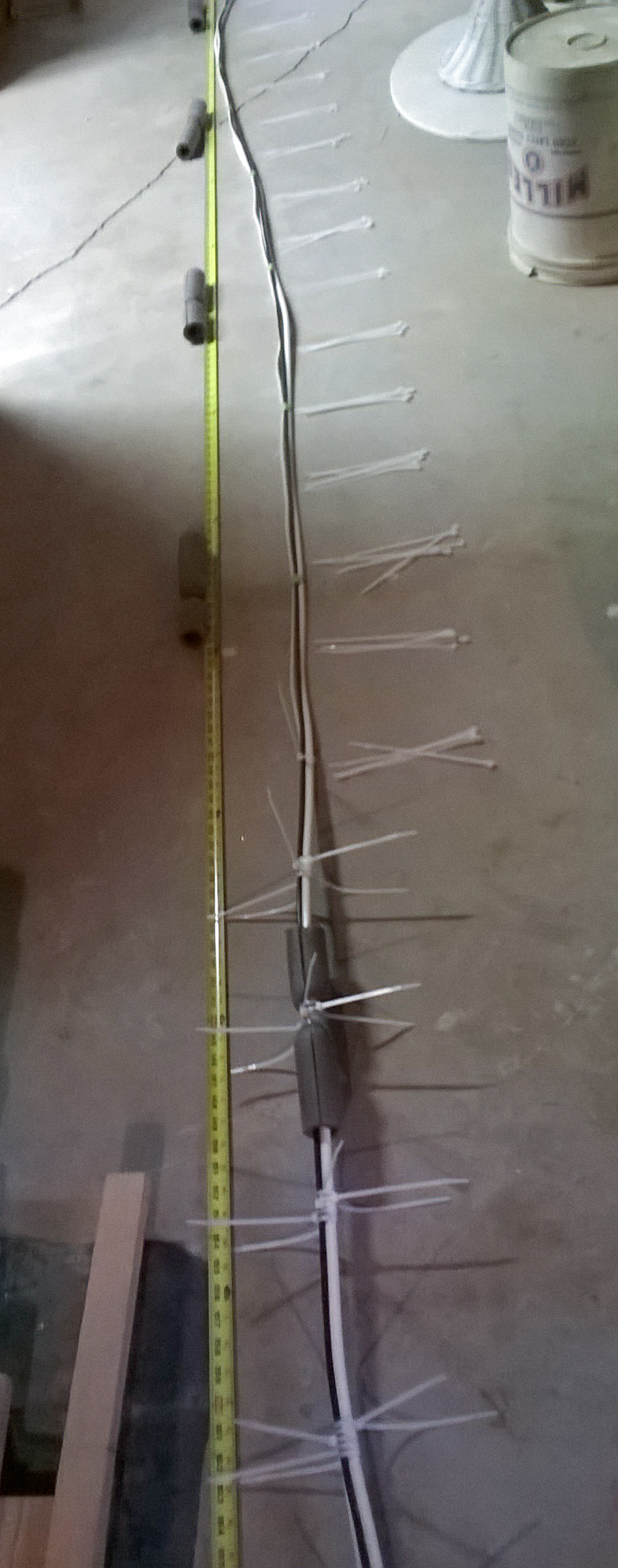
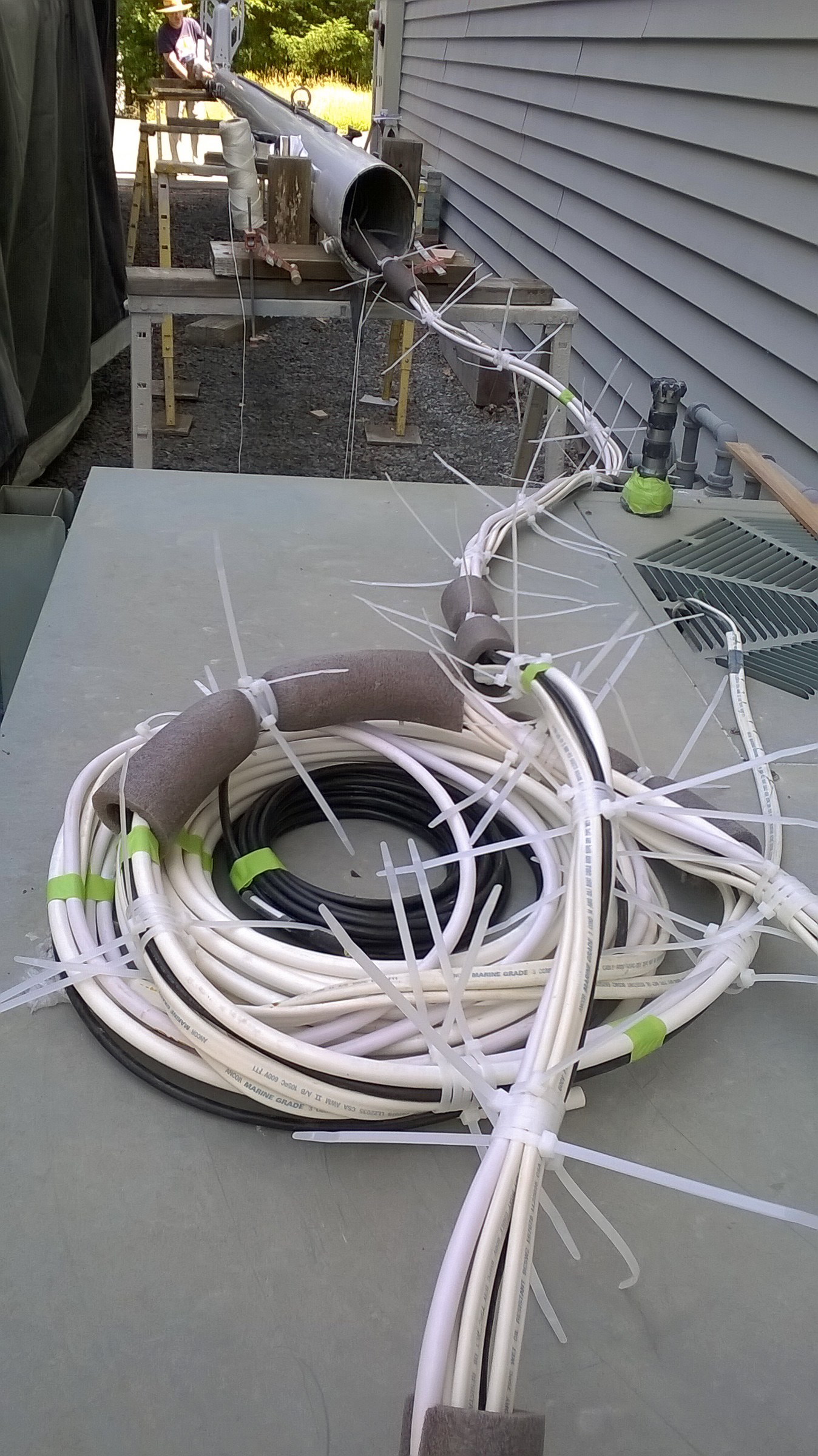
Wrapping the mast wires with cable ties and pipe insullation.
Wrapping the mast wires with cable ties and pipe insulation. Five cable ties, every 8 inches, with pipe wrap every fourth bunch.  The lowers have been installed and the upper set are lined up waiting to be tied.

Yes, it was cooler in the basement, but crawling around on your hands and knees on a concrete floor for hours is rough when you are passed middle aged.  After 287 cable ties, it was ready to be installed, or stuffed up the mast.

Mast wiring ready to go.  Messenger lines were tied to the top and the middle set of wire to help pull them up.
Mast wiring ready to go. Messenger lines were tied to the top and the middle set of wire to help pull them up.  We did have to remove the middle compression post to get everything up to the top, but eventually everything ended up in the correct places.

taped_off

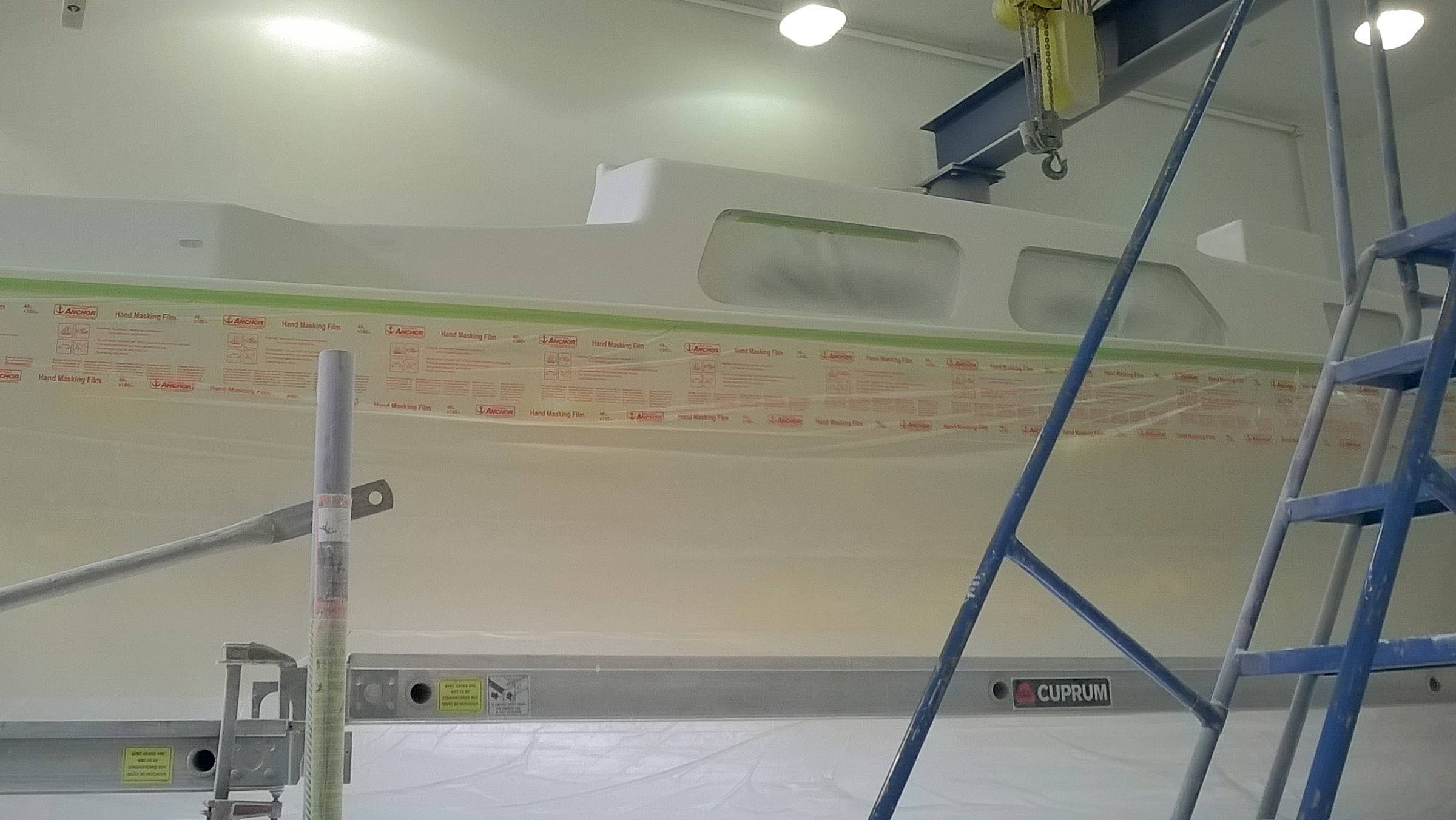
Ready for primer.
Ready for primer.  Because of the way schedules are going, the top will be painted first.  The hull is masked off with plastic.  The top of the boat really looks different when it’s all one color!