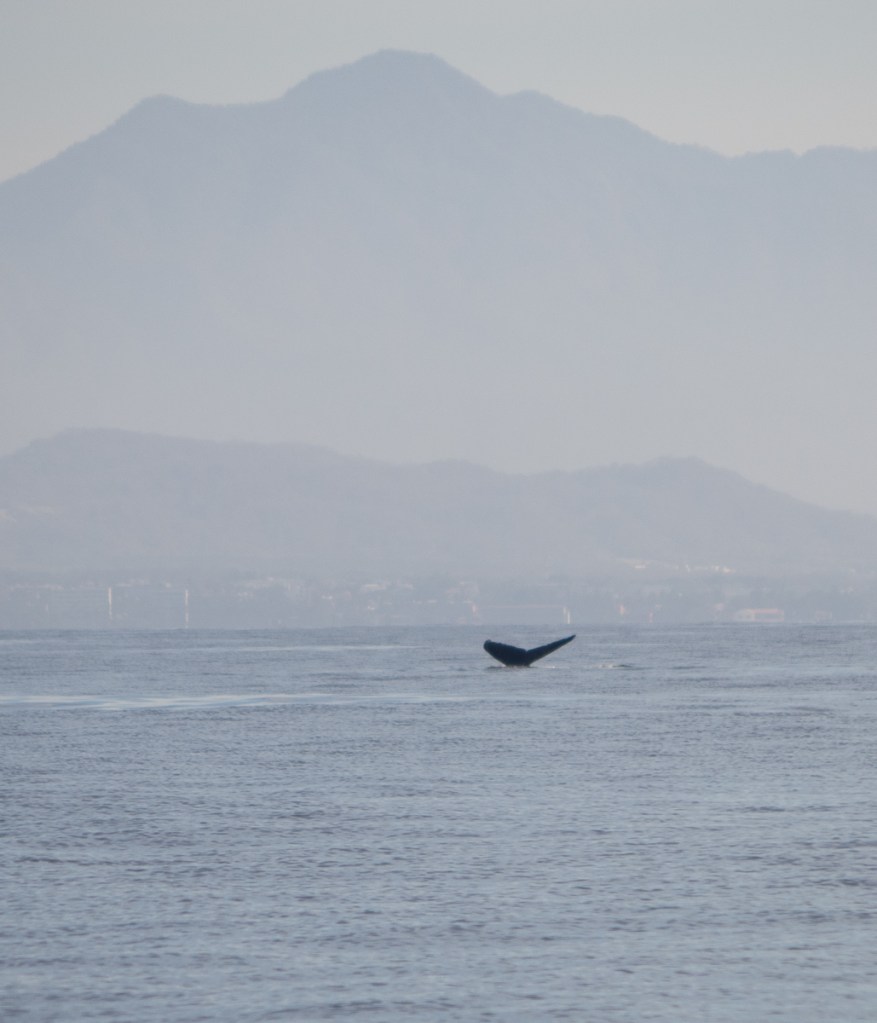
Out sailing and spotting a Humpback Whale. This one wasn’t very dramatic, but we have seen a few skyhopping away on the horizon, too small to photograph, but with dramatic splashes when them come down. The visibility of the town in the background is about average. There’s a lot of haze.
There a a number of things we like about La Cruz. We spent about a month or so here last year and we’ll probably end up spending about a month here this year. The marina is a good place for boat projects. The Sunday Market is back in a new location, the fish market is still amazing, the vegan ice cream shop still has twofer Tuesdays and we’ve been able to pick up on Spanish language lessons with Ana.
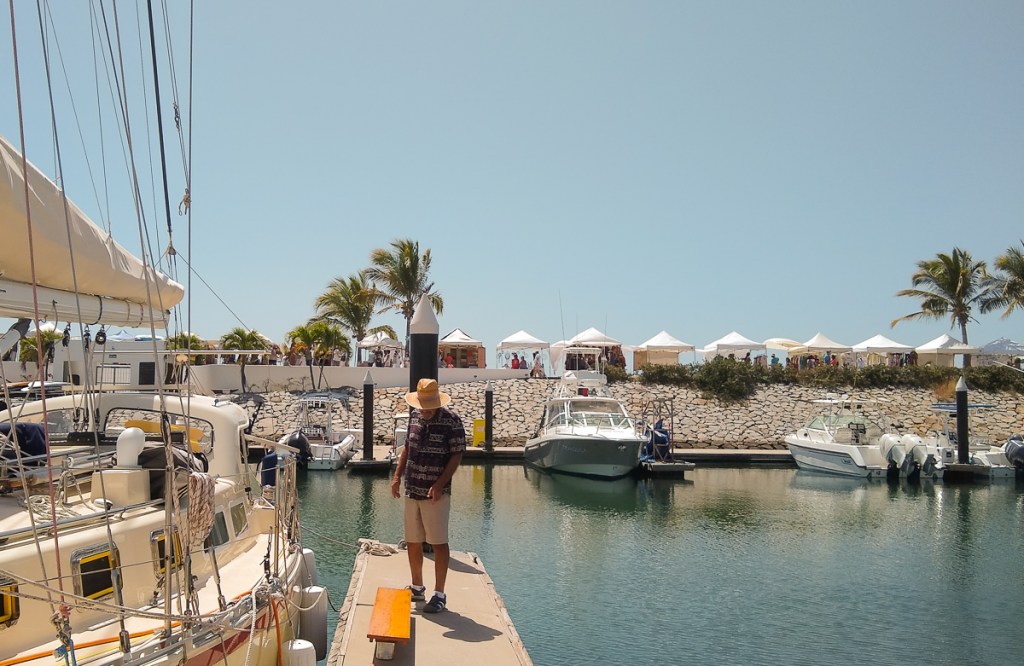
Boat project time. Our wooden dinghy was starting to show some wear, so the (back to front) seat, oars, emergency paddle and daggerboard plug all got multiple coats of varnish. On the right, Bill is looking at the seat wearing his new Tribu shirt with the Sunday Market behind him.
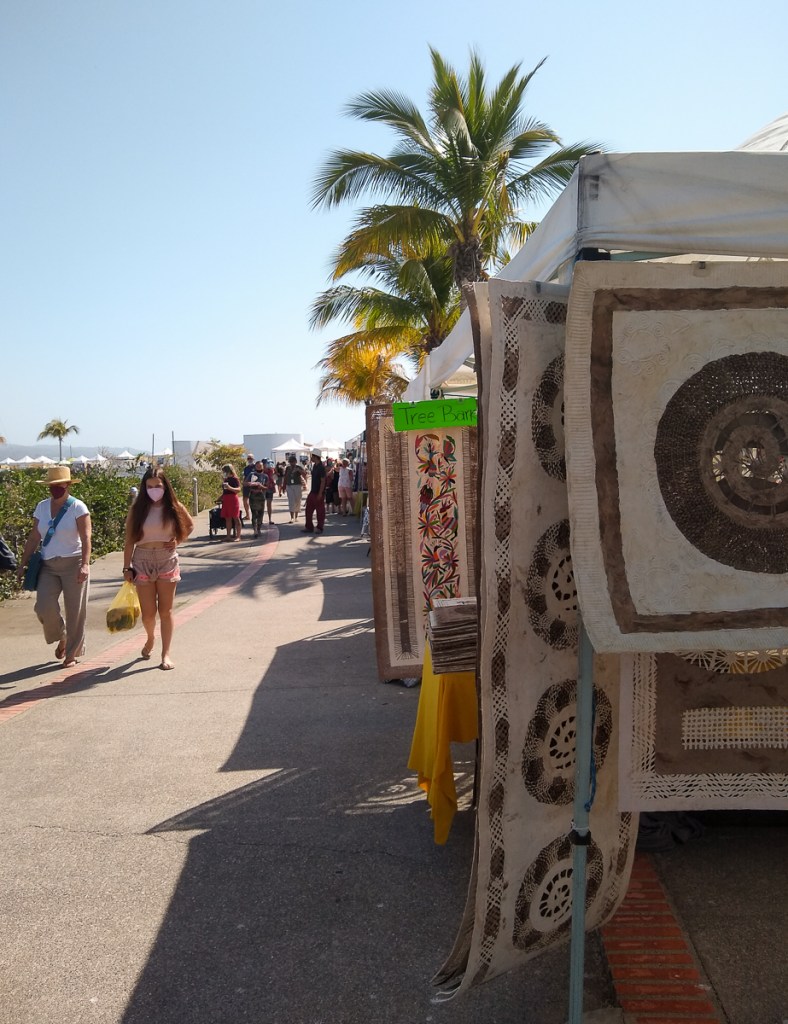
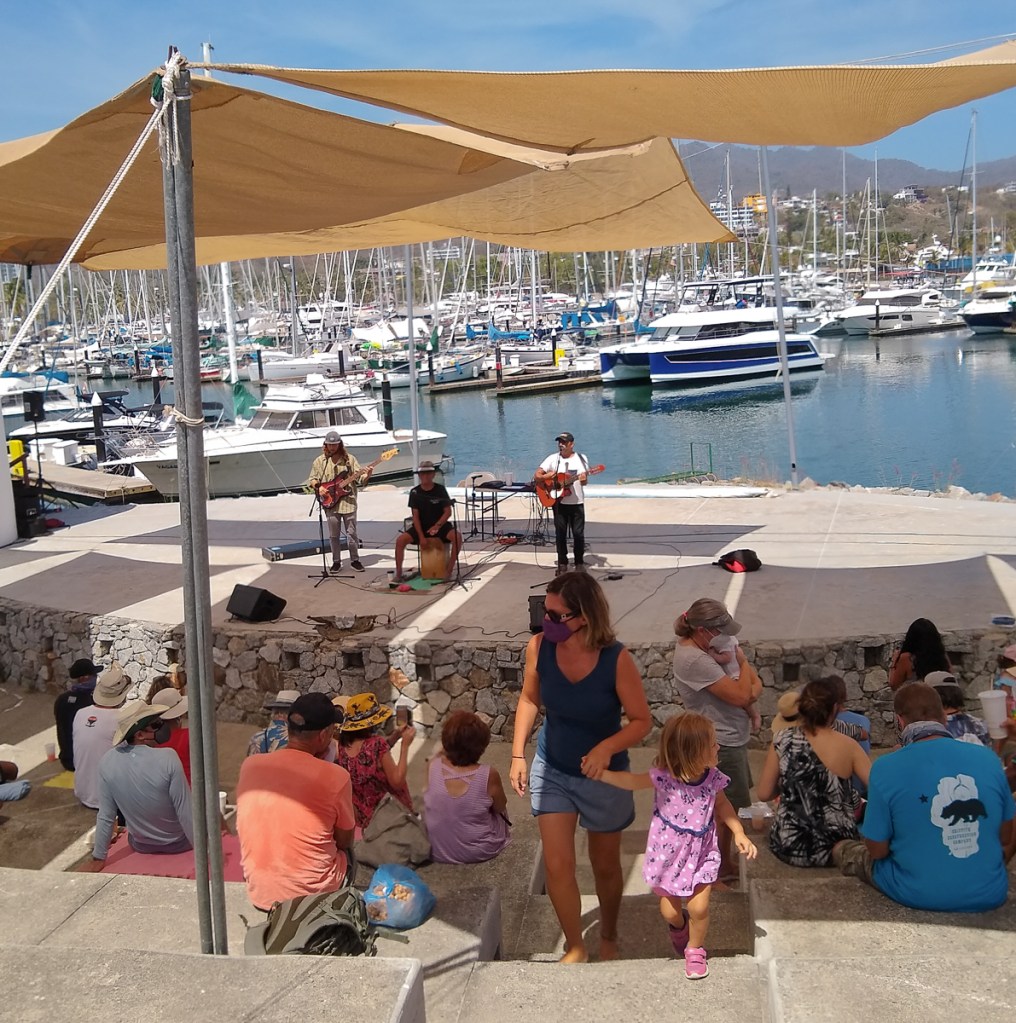
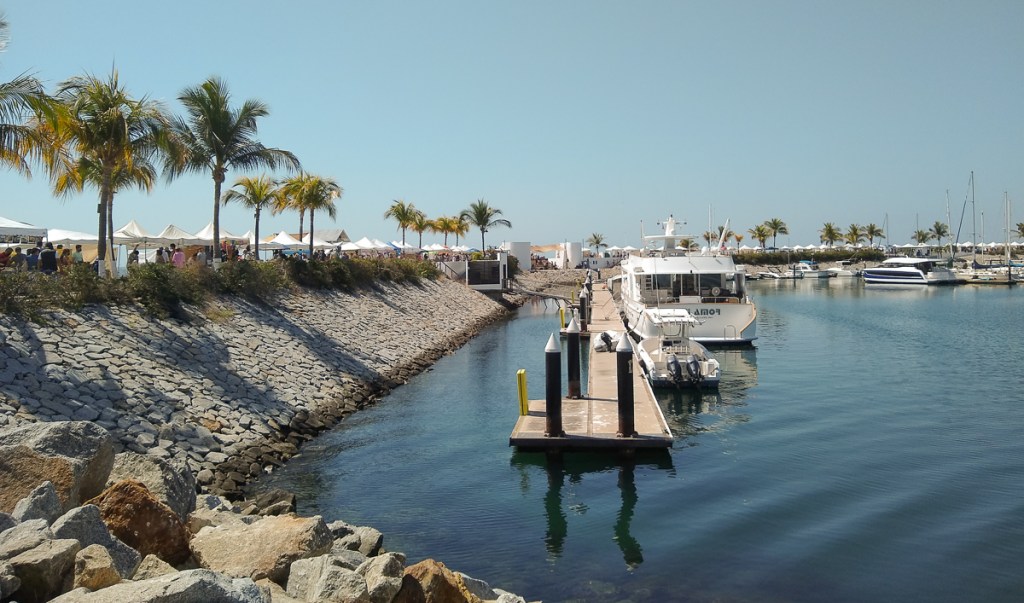
The La Cruz Sunday Market has a little bit of everything: arts and crafts, clothing, jewelry, a food court, produce and cheese, and live performers. It’s bigger than the Paradise Village market and has fewer stalls selling mass produced items. Because of Covid, the market in La Cruz moved to the breakwater and it stretches all the way around. In case you’re ever down here for the market, the Baklava stand has awesome baklava.Bill and Malu from Tribu MensWear. She makes and sells our favorite Mexican shirts. Bill is showing off his new one.
We’ve had a pretty mellow stay here. The schedule, such as it is pretty open. Sunday market. Tuesdays and Thursdays we go to Spanish classes. This year we’re sitting in on both the intermediate and the beginner and are slowly improving. Wednesdays we take Gypsy out into the anchorage do run the Amigo net. There are fewer masts out there to interfere with our radio signal propagation. Then we go sailing and run the water maker. On Thursdays we head out so Bill can be the net controller for the Sonrisa Ham net, and head back into the marina to get to Spanish class on time. The rest of the week is spent on boat projects, walking into town for groceries, doing laundry.
Life raft demonstration. Holding the tether is Mike from PV Sailing/North Sails.
Banderas Bay is a big jumping off spot for sailors heading to the South Pacific, Panama or Hawaii. Especially in January and February, there are free lectures and classes that Mike and his partner Cat coordinate or lead. The life raft demo was one of them. This was one of those sessions that had useful, practical info that we hope we never have to use.
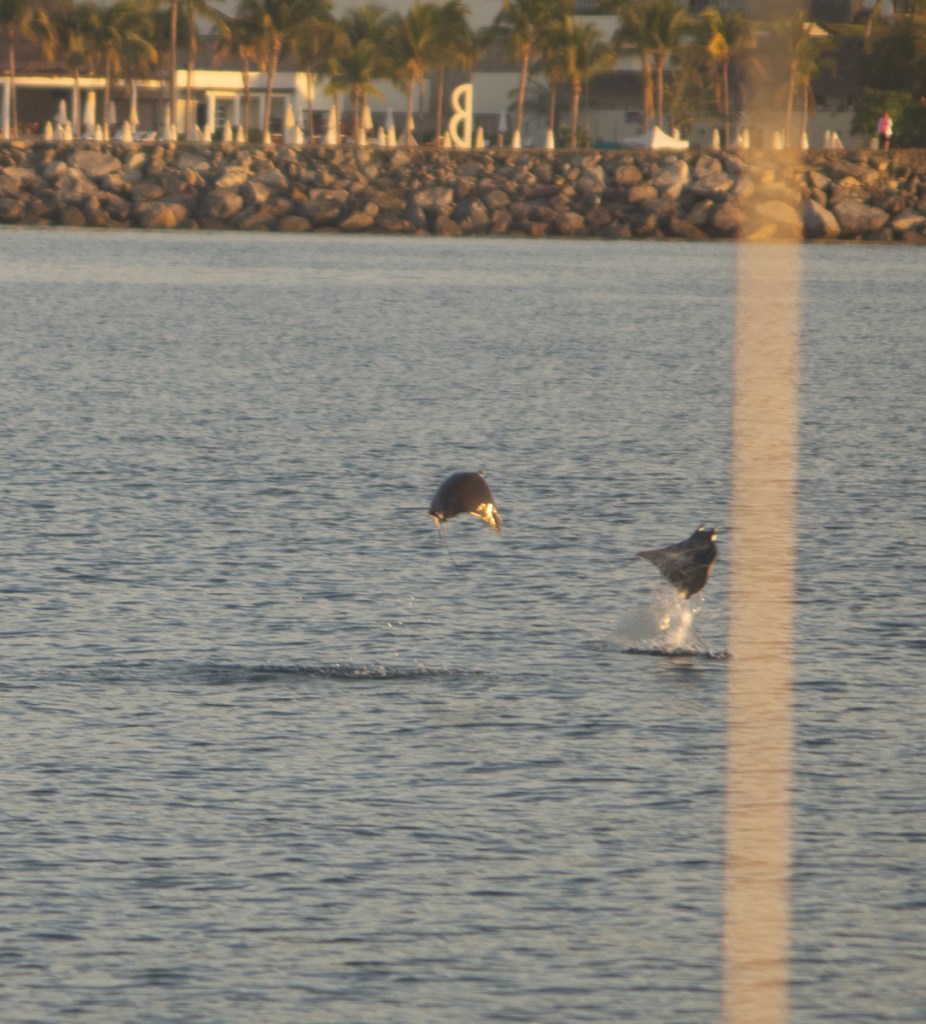
Jumping rays! They will fling themselves out of the water, flap their wings, slap back down, and do it again. Sometimes there will be six to eight in a group popping up like popcorn. We think these are Mobulas, but they could be Eagle Rays.
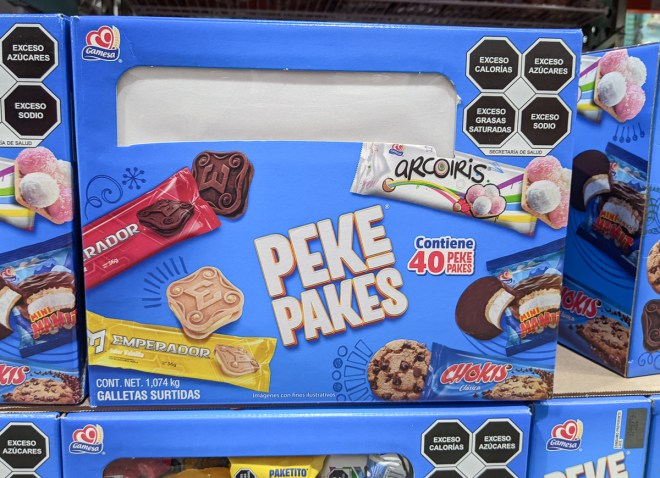
One of the things we’ve found amusing and different in Mexico is food labeling. Usually there might be one or two of the black octagons up in the corner warning you about a particular food, but this one had four! We haven’t bought this variety pack, but it has everything bad for you in it: excess calories; excess sugar; excess saturated fats; and excess salt. Clearly attributes to avoid when provisioning.
The sail from Isla Isabel to Banderas Bay was slow. We had light winds, never above 10 knots, so we ended up motoring the last three or so hours of the trip. Even then, we arrived at the Punta Mita anchorage after dark. It became an exercise in anchoring by radar. The bay is surrounded by a glare of lights. Not all the anchored boats have their anchor lights on so they are difficult to impossible to see in the dark. We were tired from a long day of light wind sailing. We finally anchored safely and slept soundly.
The next morning we thought we’d head to shore to see what the town of Punta Mita is like. There isn’t really a good place to land a dinghy. The surf was breaking on the beach with bigger waves than we like to land in. We tried going into the panga basin, where the fishermen tie up, but it was full. On the way out of the narrow entrance, we hit a sequence of four to six foot breaking waves about six seconds apart. No backing out. The dinghy went through breaking surf just fine, but now that we know that, we aren’t anxious to try it again. Back to Gypsy to weigh anchor and head for the La Cruz anchorage. We hit town to load the phone, get some internet, and some fresh vegetables. We stayed for a couple of nights, took the dinghy apart and put it back on the foredeck and then meandered over to Paradise Village.
The marina at Paradise Village is in Nuevo Vallarta and is part of a huge resort complex complete with a mall, a hospital, more hotels and condos than can be easily counted, and live bengal tigers. It’s also the only marina in Banderas Bay that has potable water at the docks.
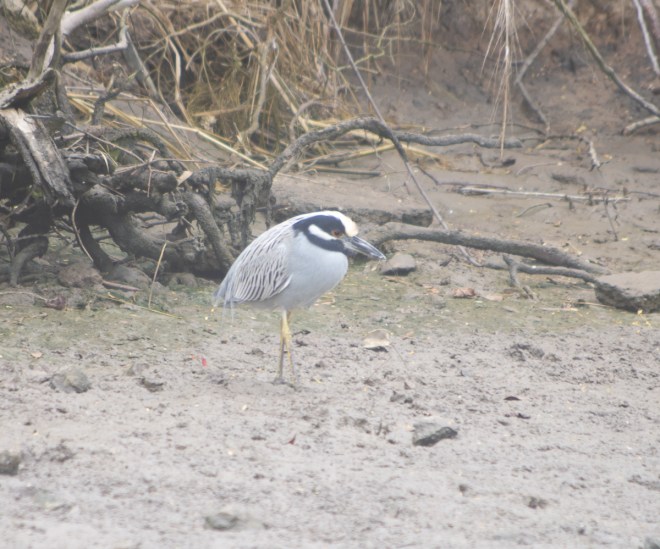
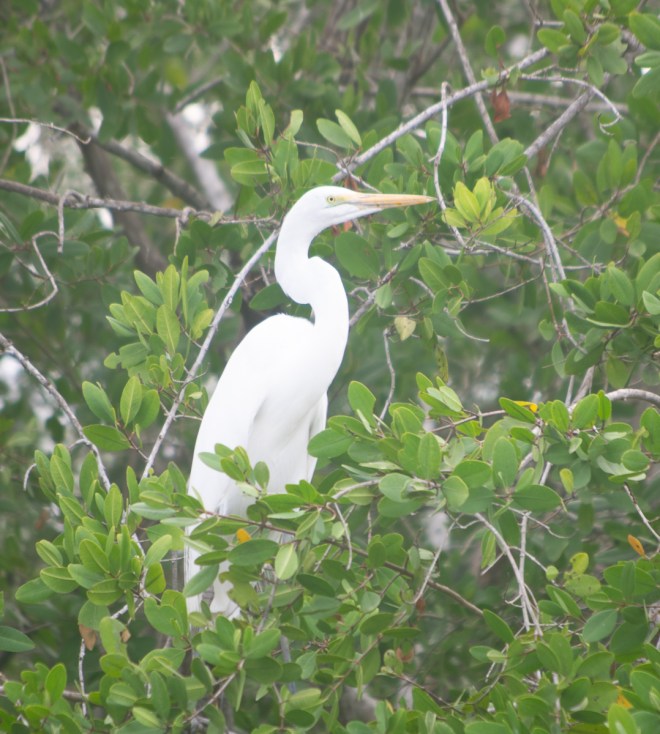
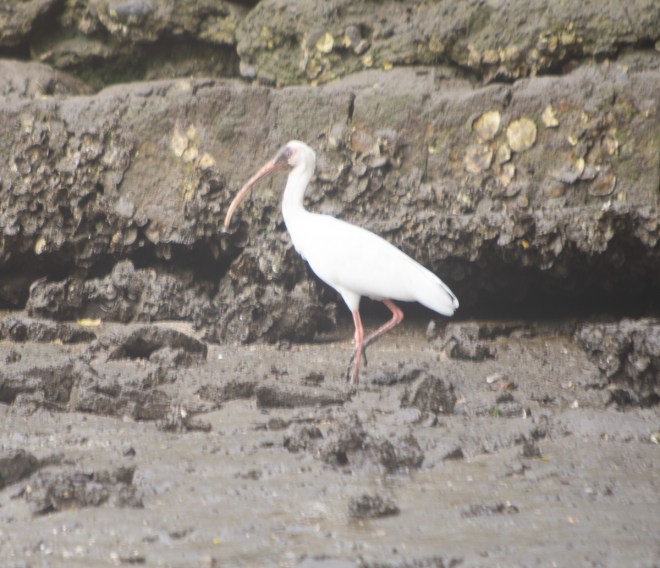
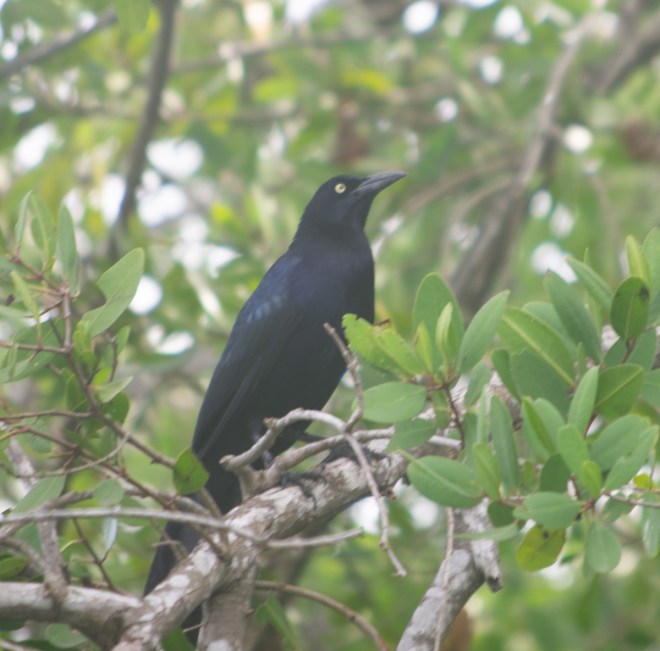
To get to the port captain’s office from the harbor master’s office you have to take a water taxi. It wasn’t working that morning so we put the dinghy back together. Since it was together, we took it up the estuary to see if we would see any cocodrilos. It was low tide and what we saw instead: lots of herons and iguanas, and a dredge that made us nostalgic for Rose City Yacht Club in Portland.
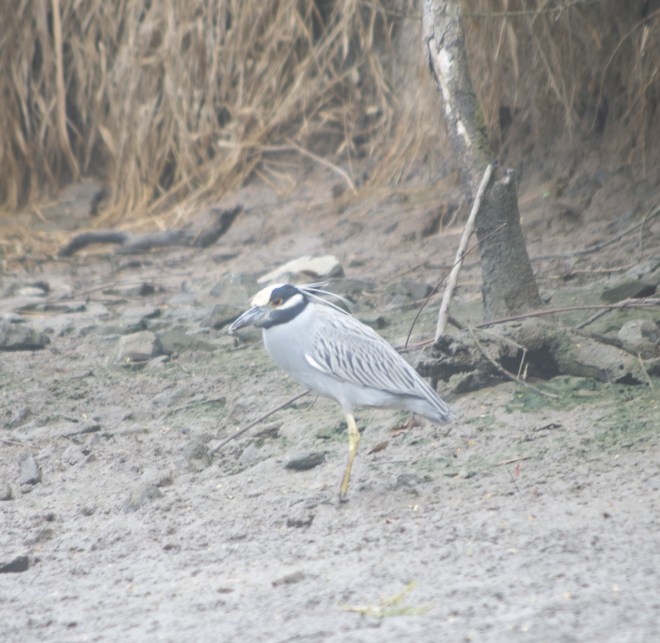
A couple of Yellow-Crowned Night Herons.
A Great Egret on the left and a Great Blue Heron on the right.
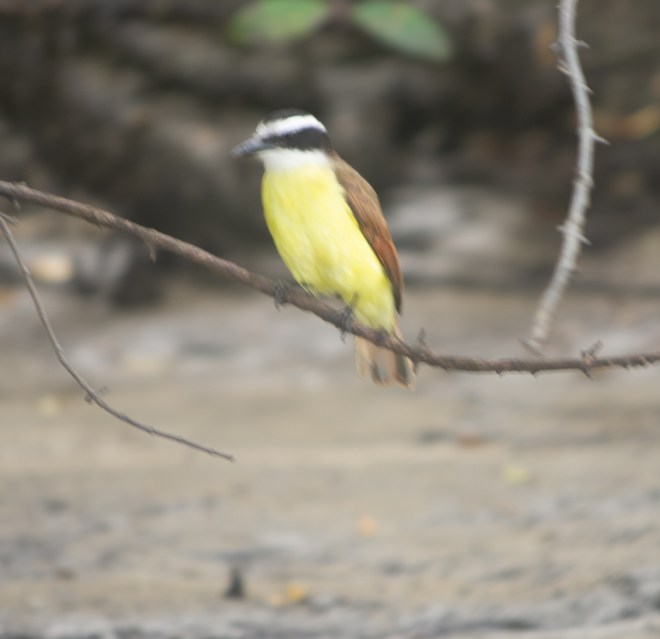
Left to right: a White Ibis, a Great-Tailed Grackle, Great Kiskadee.
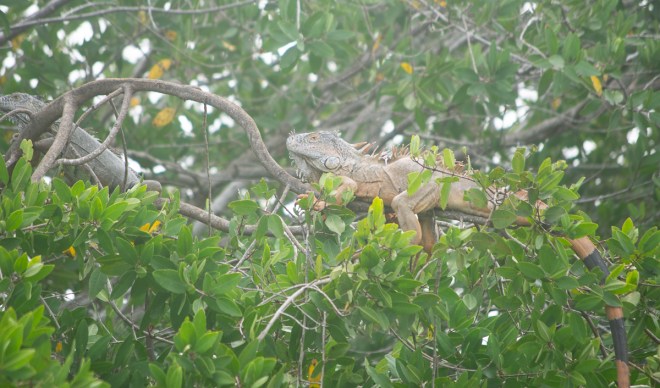
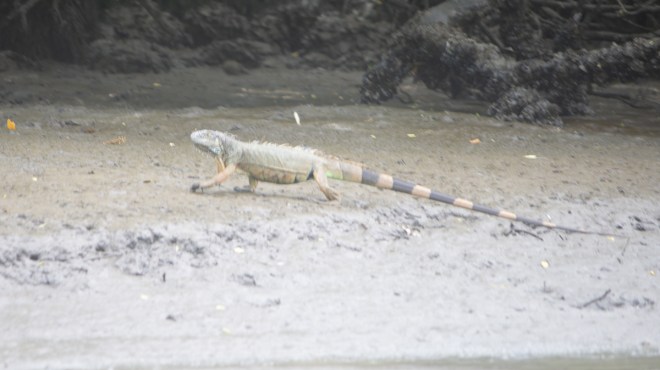
Green Iguanas. There were more iguanas visible in the trees than birds. All of these were about a meter long.
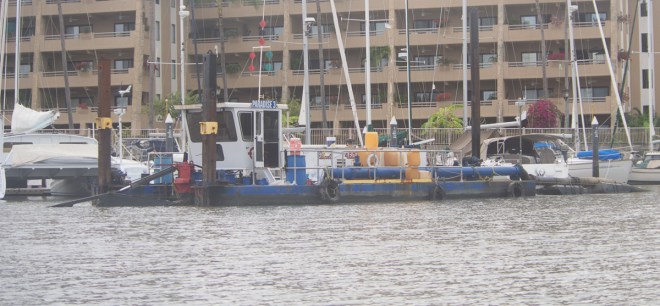
The dredge at Paradise Village Marina. The floats on the right were large plastic jugs attached to the spoils pipe.
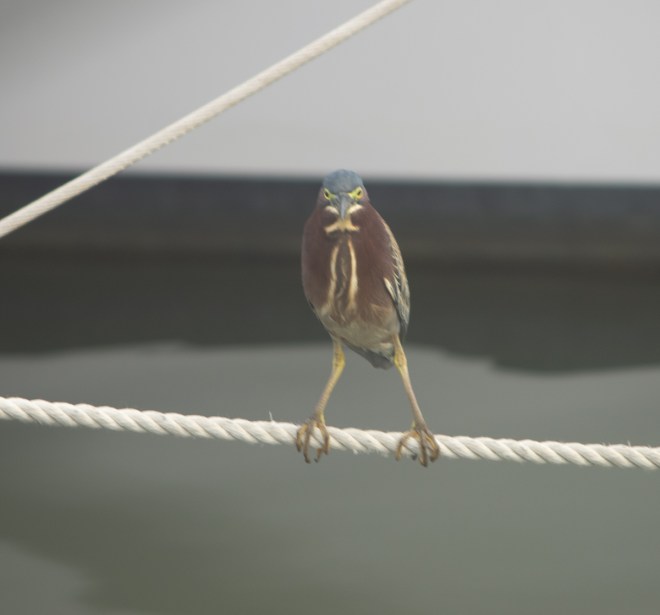
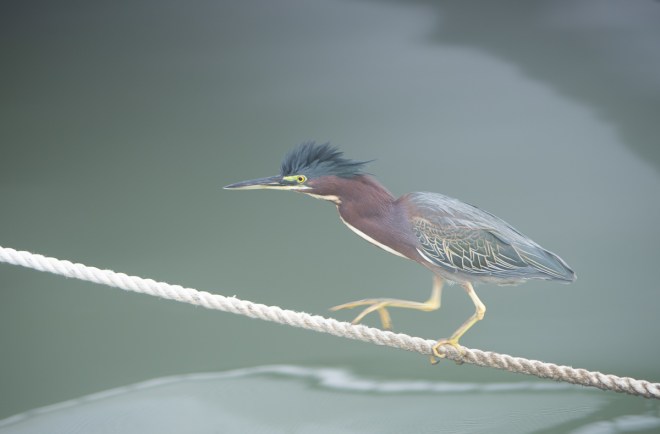
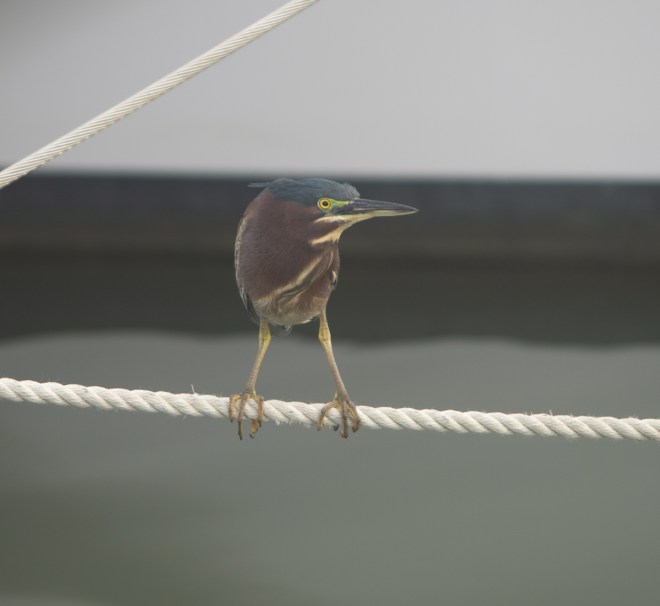
When we got back from our dinghy trip, this lovely little heron was hanging around the boats. It’s a Green Heron. The nice thing about herons is that they are big enough to start seeing details and the are much slower moving than all those fast little brown birds.
Paradise Village is nice, but it’s isolated in its own part of the bay. We rented a car one day to hit La Comer and Mega (grocery stores), Home Depot for peat moss for the composting toilet, and Costco. Bill discovered that driving in Mexico is still an adventure, and he had a conversation with a nice motorcycle cop about a signal that had gone red while he was in the intersection. Nina had just remarked that “you ran a red!” when he saw flashing lights. Thankfully, there was no mention of la grua, and he was able to pay his fine and get on our way.
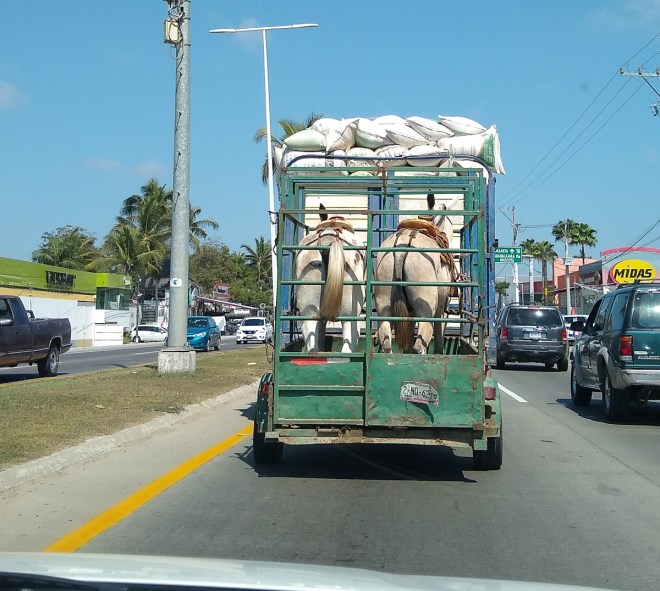
Back to the big city. On the way to Puerto Vallarta to hit the big stores.
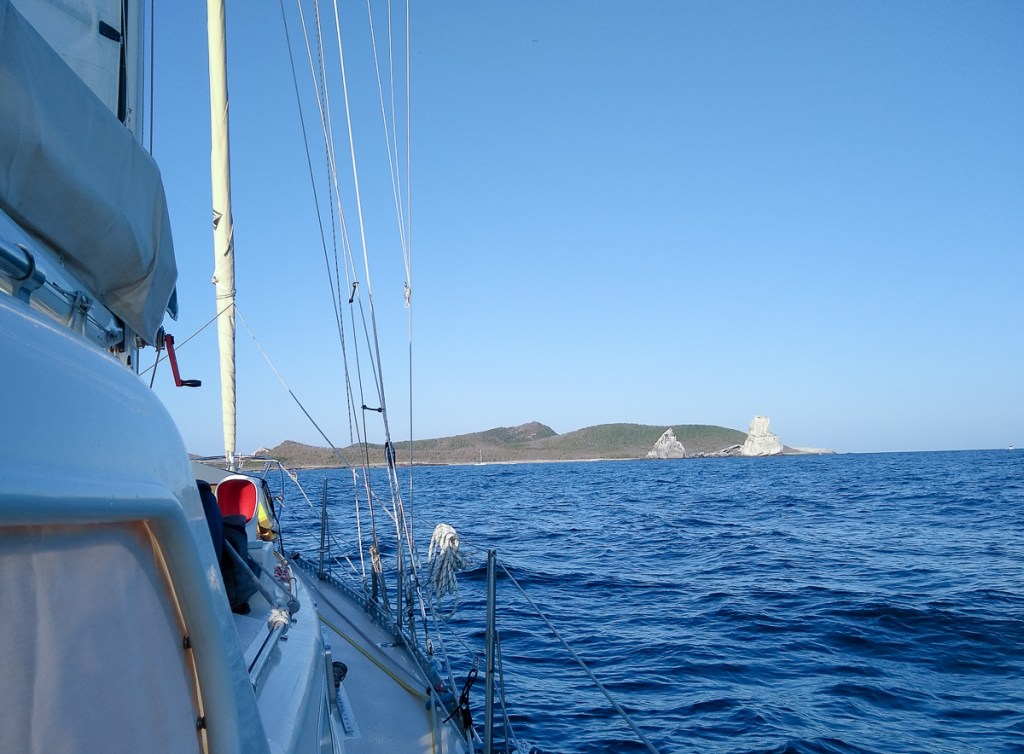
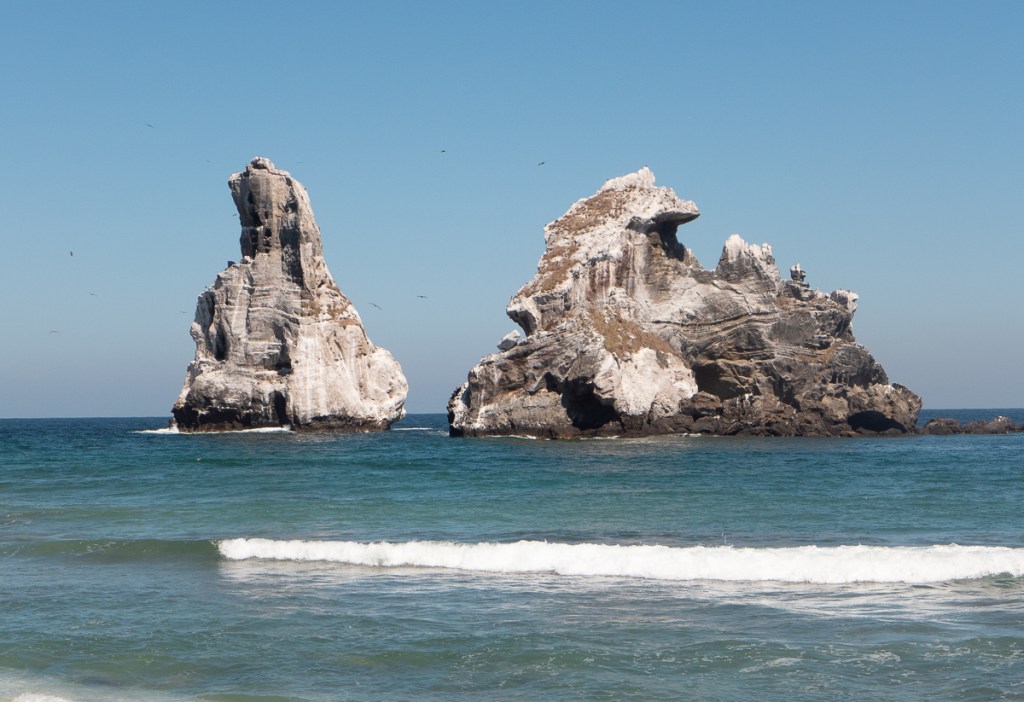
Coming up to Isla Isabel. The big rocks on the right are called the Monas. We anchored to the left of the sailboat that is almost visible in the center of the island.
We almost skipped Isla Isabel this time. We estimated the passage time from Mazatlan to Isabel so that we’d arrive there just after daybreak. What we didn’t include in our time estimate was that winds near Mazatlan were getting us sailing speeds of around 7 knots for most of the afternoon rather than the 5 that we’d used to calculate the time. At the faster speed, we’d arrive at 3 am. The question became: do we continue on to Banderas Bay so we don’t have to anchor in the dark? Luckily, the wind decided to drop in the middle of the night and we ghosted up to Isabel at daylight. There was one other boat anchored on the east side of the island, Perspective, who we’d met in Pichelingue. Two more sailboats were anchored in the south anchorage off the fish camp. Our anchor down, we heard from Perspective on the radio. Were we up for a hike? Of course.
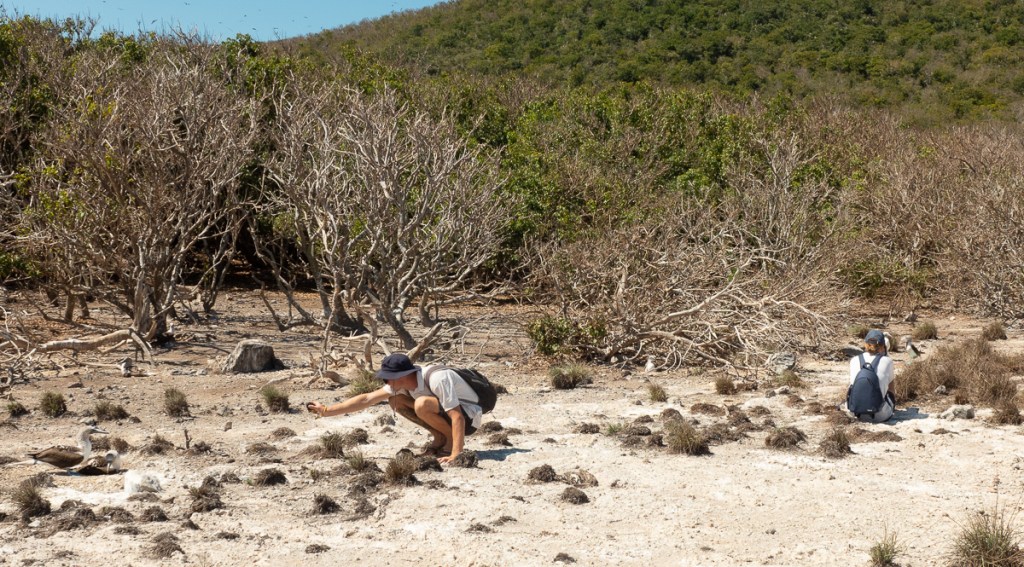
Isla Isabel is called the Galapagos of Mexico. The diving is excellent and often has ecotours staying at the old research station. There are iguanas endemic to the island. It’s also a protected habitat for blue footed boobies and magnificent frigate birds. When we were here last year, it was courtship season. This year, since we got here later, there were babies! We walked past nests right off the side of the path. The birds don’t get up as you go by, they just clack their beaks at you. At one point we saw a Blue Footed Booby courtship dance. It was very stately. The male would raise one blue foot and then the other, all while his tail feathers were erect. The female mostly ignored him and then would give him a nip. He kept up his dance, and then gave her a twig. We aren’t sure why, as their nests are a clean hollow in the dirt.
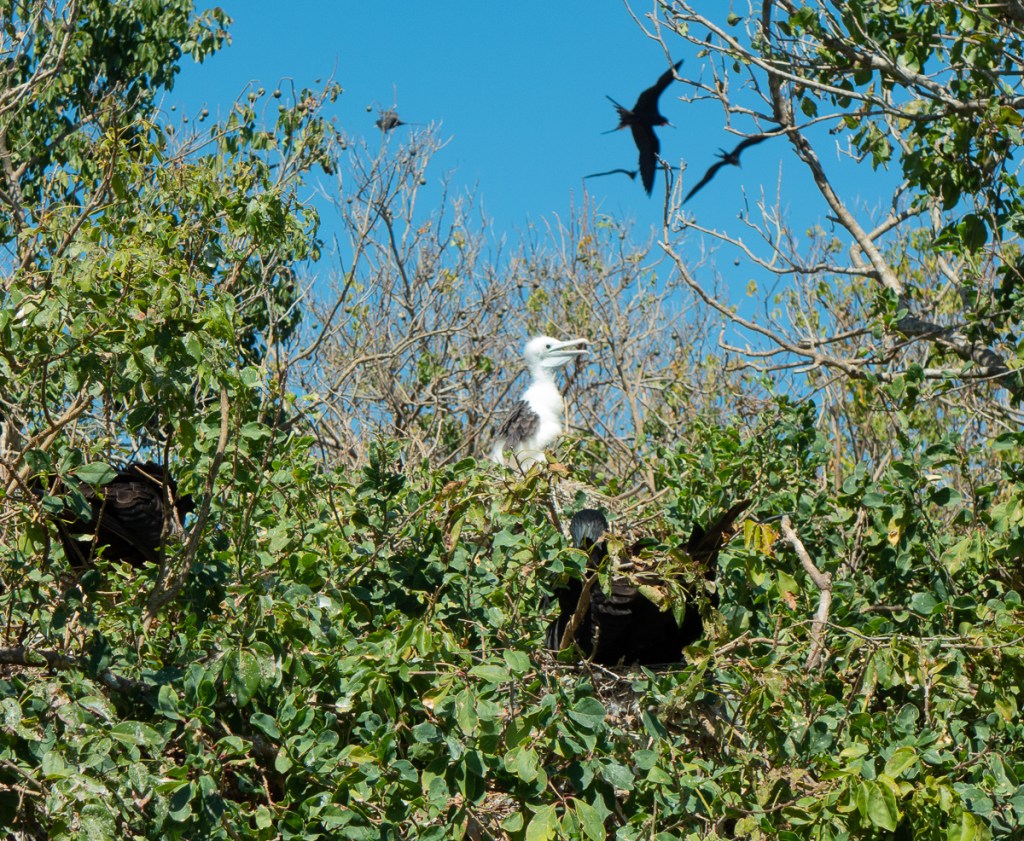
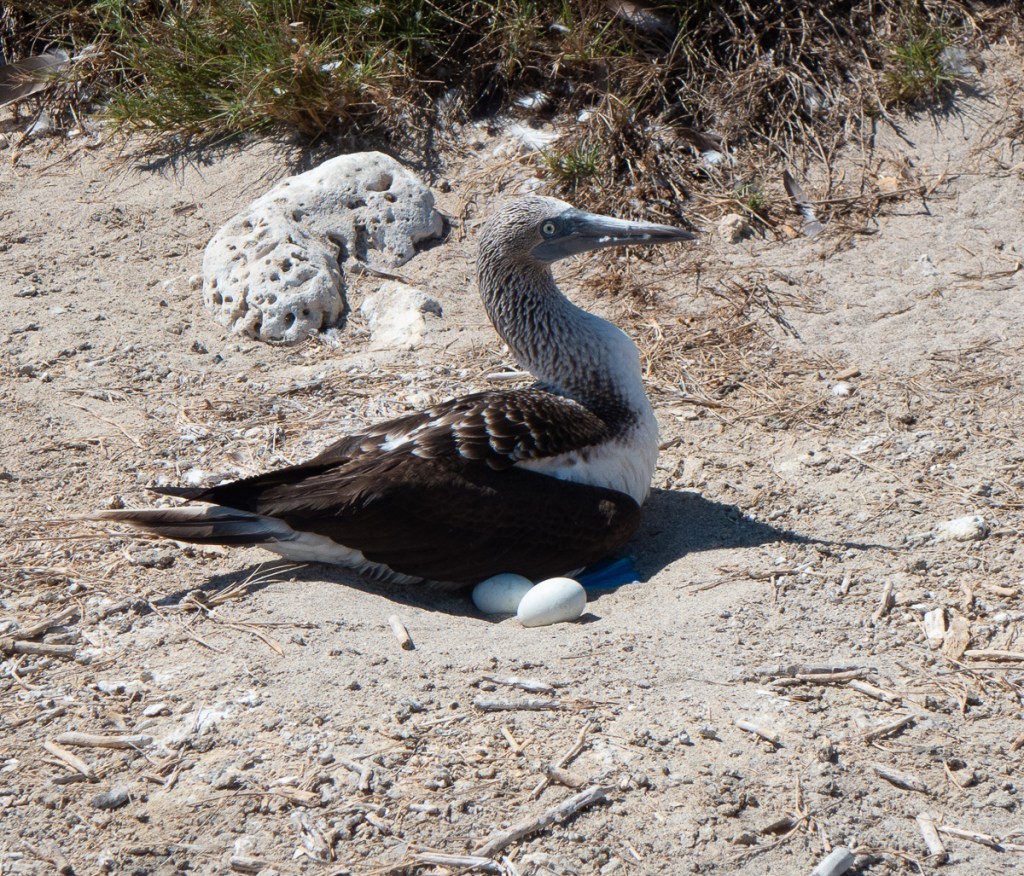
Top, left to right: Magnificent Frigate Birds with babies, Frigate nest in a tree with Blue Footed Booby nests on the ground under it. Bottom, a proud booby mama and her chick, and a booby on her eggs. Andrew from Wastrel photographing boobies.
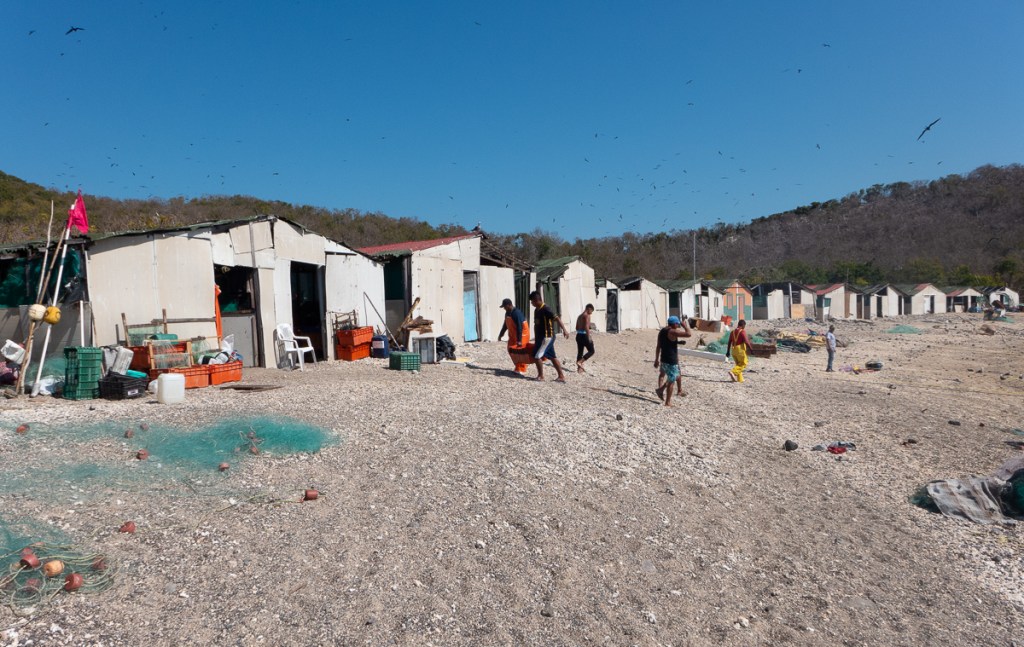
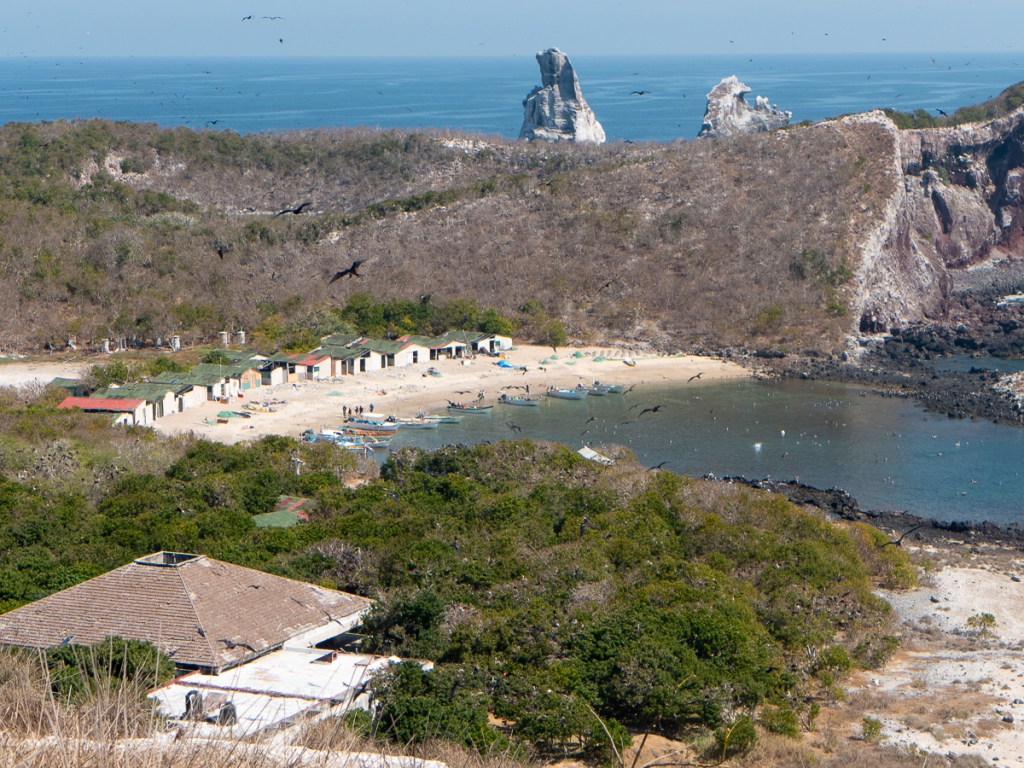
The fish camp on Isla Isabel has around 15 shacks for the fishermen, some of whom have their families with them. They fish out of open boats called pangas, and use both nets and line to catch fish. When they come back to camp, they have an entourage of hungry birds circling them hoping for a meal. The birds are a mixture of boobies, frigate birds, gulls, and pelicans. We hiked up to the top of the hill on the west side of the island. In the foreground on the left is the old research station with the fish camp on the beach. The trees by the research station are full of Frigate Bird nests. Most of the Blue Footed Booby nests were on the other side of the far hill. There were also booby nests at the top of the hill. The Monas are in the background. Birds are everywhere.
There are literally thousands of birds on Isabel. Frigate Birds build their nests in trees, Blue Footed Boobies on the ground in the dirt. The Booby nests are very clean and very exposed. Sometimes their nests are right under the Frigate Birds. The Frigates tend to leave the boobies alone until there is food, and then they turn into dive bombing bullies.
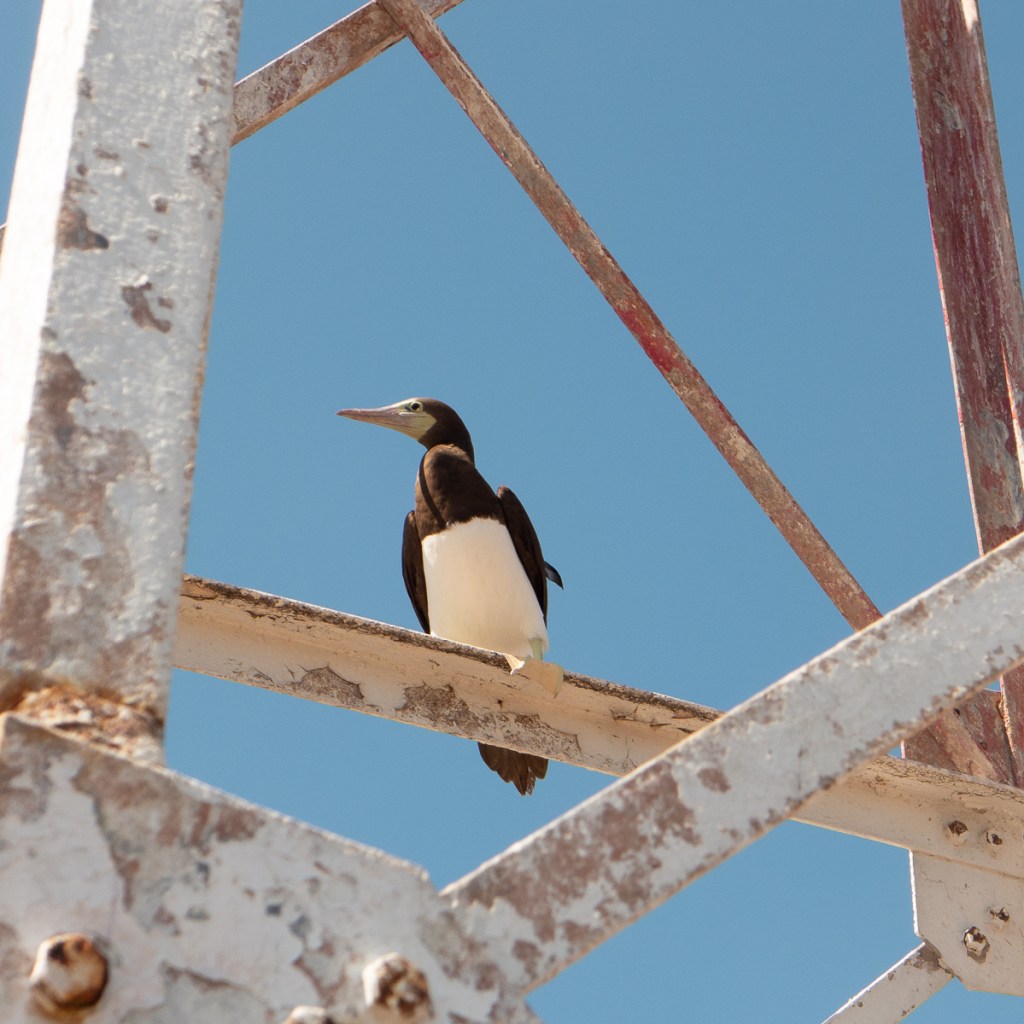
Boobies. Blue Footed on the left, a Brown on the right. The feet on the Brown Boobies are a light green.
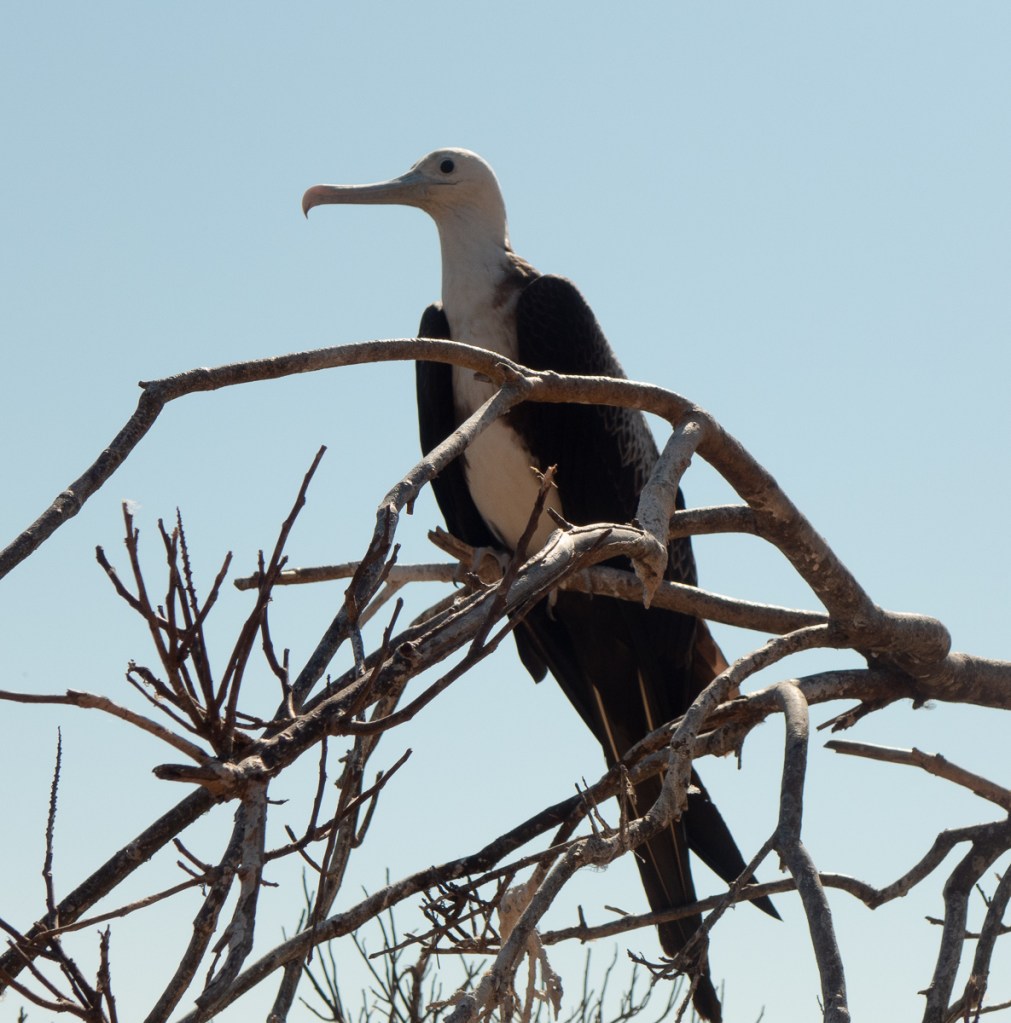
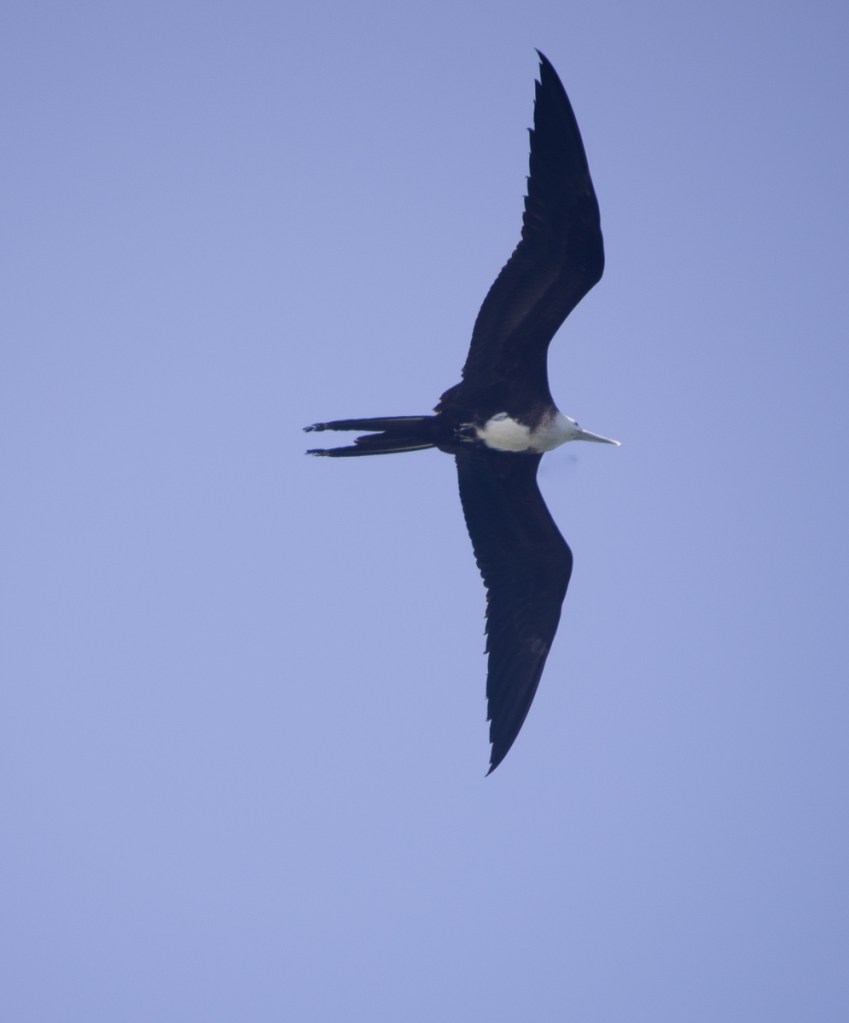
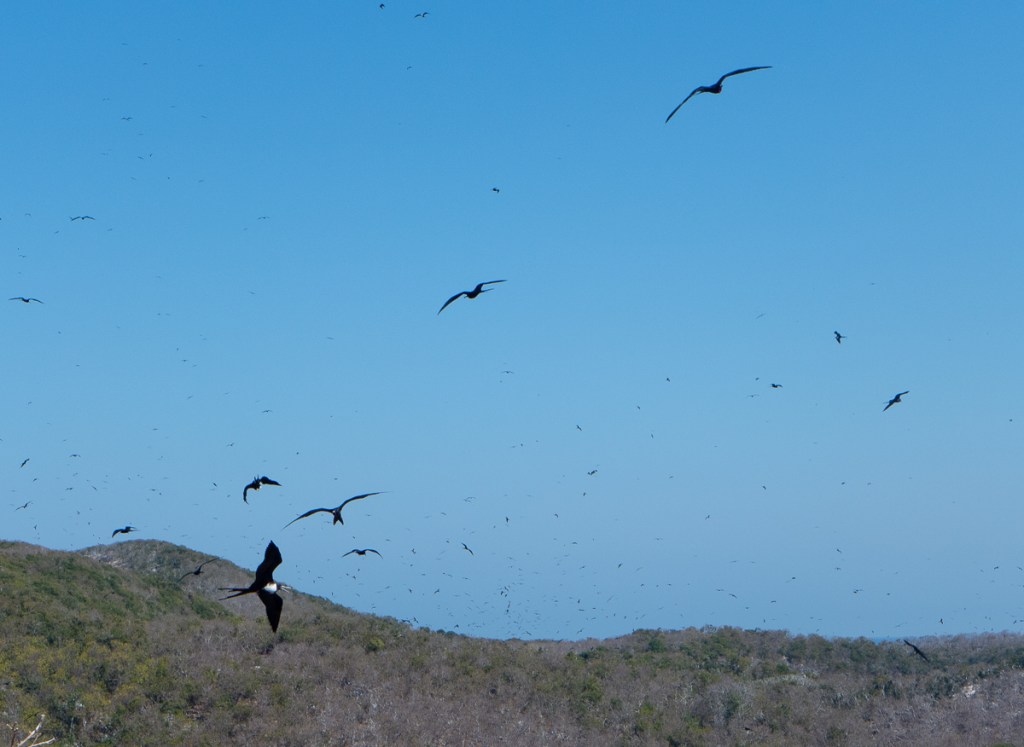
Magnificent Frigate Birds. They don’t look that big when they are soaring overhead, but up close, their beaks are about six inches long and their wingspan about six feet. On the right, it’s hard to see, but there were hundreds of them riding a thermal over the hill.
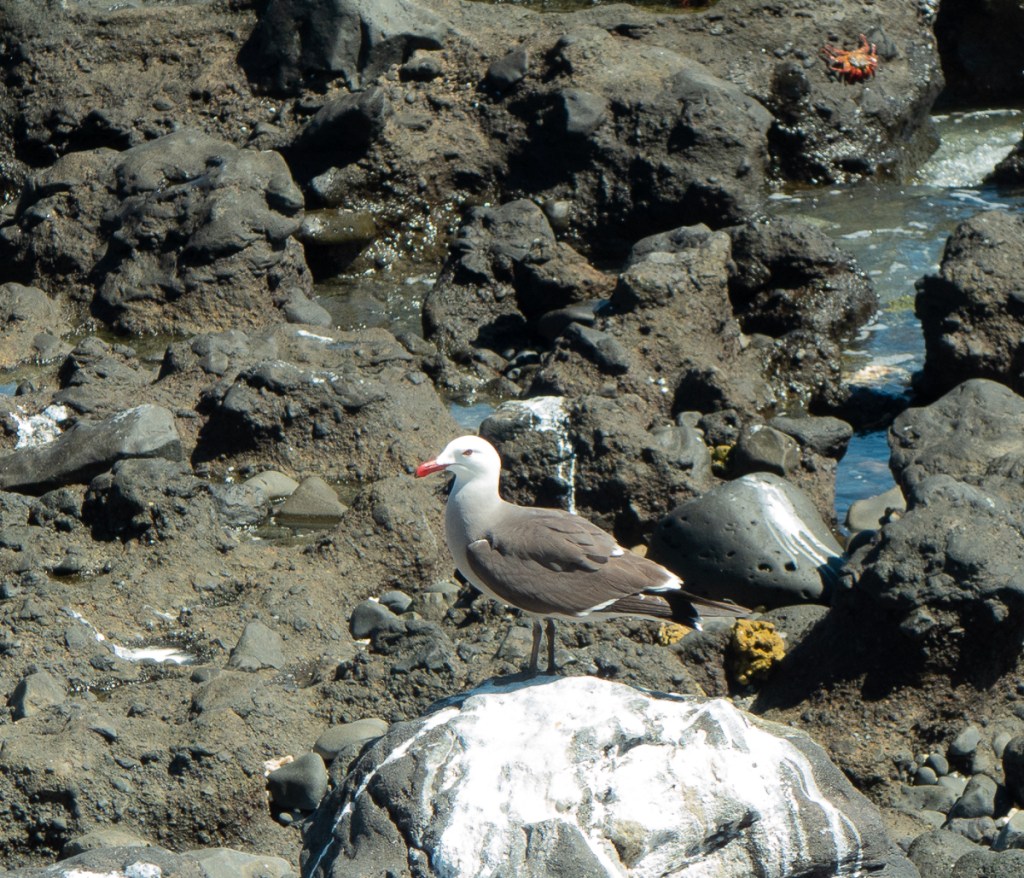
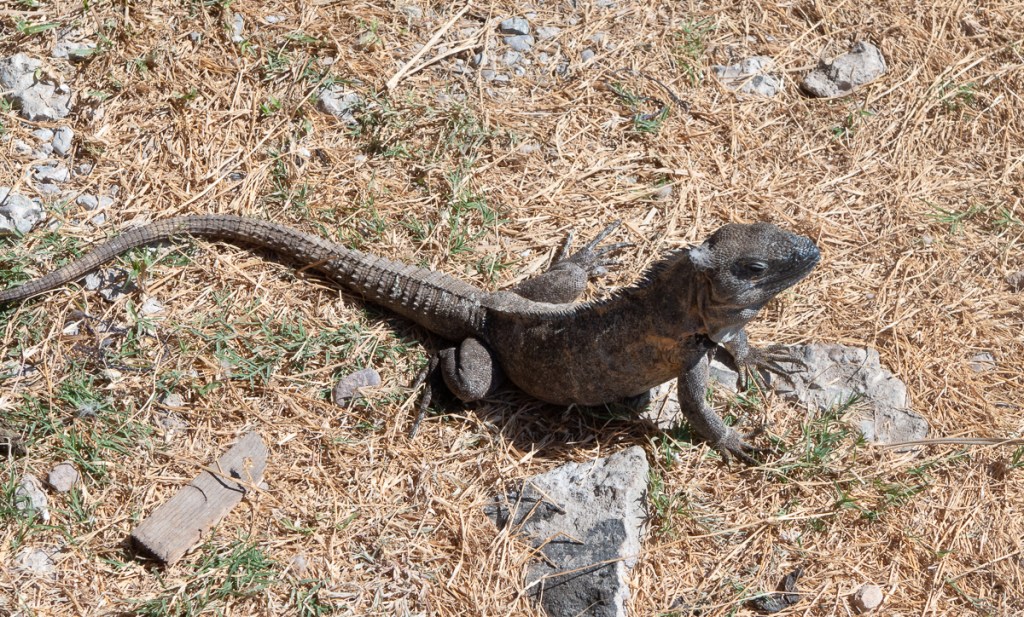
Other island wildlife: Heermann’s gull and an iguana.
The Monas. The diving here is supposed to be very good. Andrew from Wastrel went spear fishing everyday and caught more than he could use. He gave us a lovely blue trigger fish and a red snapper. They were both very good eating: the trigger fish became ceviche and the snapper a couple of nice fillets. We are learning our fish anatomy.
Bill snorkeled around the boat to check on the bottom. What he didn’t tell Nina was that he had the dinghy kill cord in his pocket. She saw something red float by and thought it was a hot sauce bottle or something. By the time Bill realized it was gone, it had been half an hour. We got in the dinghy and rowed in the general direction the red thing had drifted and managed to spot it with the binoculars. We got to it just before it floated into the rocks on shore. We can use the dinghy motor again! Lesson learned: if you see something, say something.
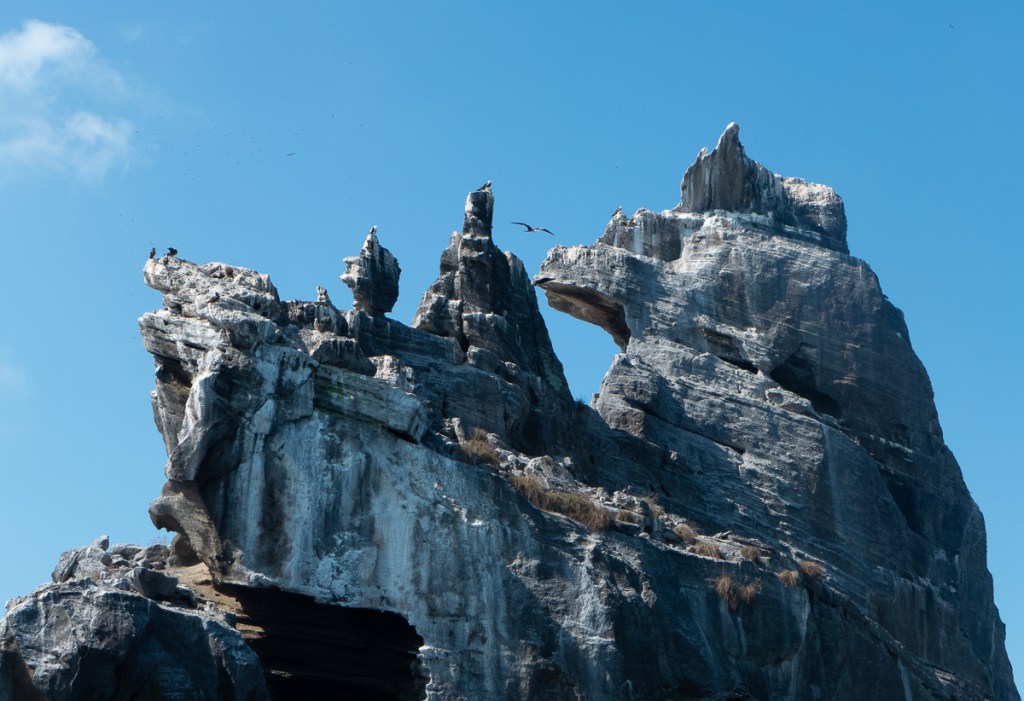
A Brown Pelican on one of the Monas.
We ended up spending about three days at Isabel, a truly amazing place.















 GypsyKramer